Are Australian Labradoodles affectionate and cuddly dogs?
Last Tuesday morning, my eight-year-old came downstairs crying. She'd had a nightmare. Before I could ask what was wrong, our chocolate tricolor Maple walked over and put her head in her lap. My daughter wrapped her arms around Maple's neck. A minute later, she was smiling again.
This happens all the time at our house. Our dogs know when someone needs comfort. Australian Labradoodles are incredibly affectionate. They bond deeply with their families. If you want a cuddly dog who loves being close to you, this breed is perfect.
They Stick to You Like Velcro
People call Australian Labradoodles "velcro dogs." They follow you from room to room. They lie at your feet while you work. They wait outside the bathroom door. If you're there, they want to be there too.
Our dogs do this constantly. They follow me to the kitchen. They follow my husband to the garage. They follow our daughters upstairs to bed. It never stops.
Some people might find this annoying. We love it. There's something nice about always having a furry friend nearby.
See Available Australian Labradoodle Puppies →
They Love Cuddling
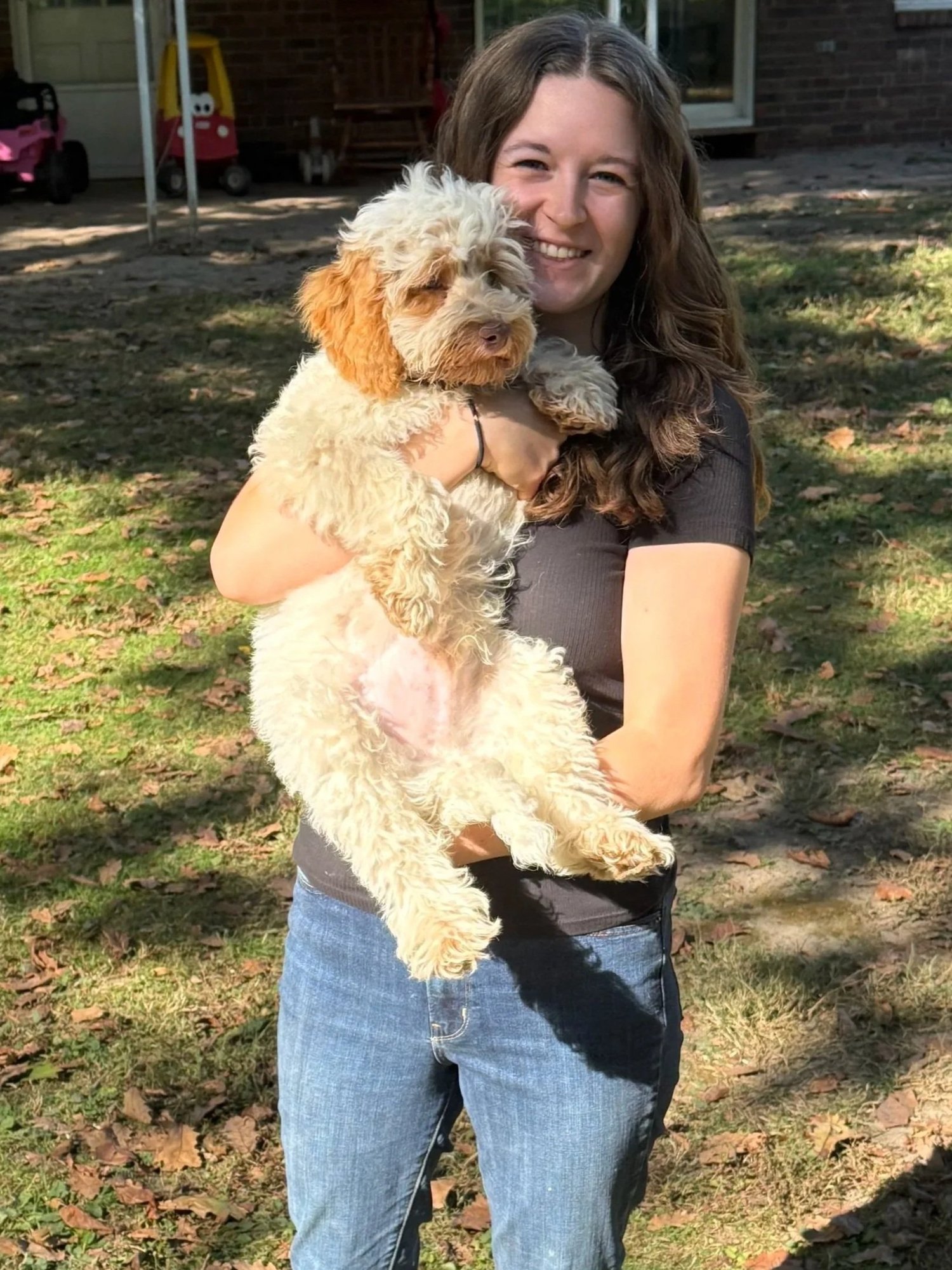
Australian Labradoodles are excellent cuddlers. Their soft coats feel like teddy bears. They're the perfect size for curling up next to you on the couch. They're not so big that they crush you, but not so small that you can't really hug them.
Our dogs will cuddle anytime, anywhere. On the couch during movie night. In bed at night. On the floor during family game time. Wherever you sit, they want to touch you.
Their coats don't shed much, so you can hug them without getting covered in dog hair. This makes cuddling even better. You get all the warmth and softness without the mess.
They Play When You Want to Play
Here's what makes Australian Labradoodles special. They're cuddly when you want to relax. But they're also playful when you want to have fun.
Our dogs love playing fetch with our daughters. They love tug-of-war. They love running around the yard. When it's playtime, they have plenty of energy.
But when playtime ends and we sit down, they calm right down. They switch from play mode to cuddle mode instantly. This makes them great family dogs. Kids can run around with them during the day. Then everyone relaxes together at night.
They're Gentle With Kids
Our daughters are 8 and 11. They can be rough when they play. The dogs never snap or get mad. They're patient and gentle even when the girls are being rowdy.
Australian Labradoodles seem to understand that kids need extra patience. They let our daughters hug them. They tolerate loud noises. They're careful not to knock small children over.
This gentle nature is why so many Australian Labradoodles work as therapy dogs. They have a natural sense of how people feel. They adjust their behavior to match the situation. A calm person gets a calm dog. An excited person gets a playful dog.
Apply to Reserve an Australian Labradoodle Puppy →
Do They Have Separation Anxiety?
You might worry that dogs this affectionate can't handle being alone. Some velcro dogs do develop separation anxiety. They panic when their people leave. They bark, destroy things, or have accidents in the house.
The good news is that properly raised Australian Labradoodles handle being alone just fine. We use Puppy Culture to raise our puppies. This program teaches puppies to be confident and resilient. It includes exercises that help puppies feel comfortable alone for short periods.
By the time our puppies go home, they're already comfortable with crates. They can handle being alone for a few hours. They understand that you'll come back. They don't panic or destroy things.
This matters because real life means you sometimes have to leave. Work, school, errands - you can't always bring your dog. Australian Labradoodles from breeders who use Puppy Culture are affectionate without being anxious. They love you, but they're also confident and independent when needed.
Texas A&M University research shows that puppies learn about bonding between 3 and 12 weeks of age. Good socialization during this time creates confident, well-adjusted dogs¹. Our puppies get handled daily by our family. They meet visitors. They experience normal household activities. This creates dogs who are loving but not clingy or anxious.
They're Friendly With Everyone
Australian Labradoodles don't just love their families. They love everyone. Visitors to our house get warm greetings. People at the vet get tail wags. Other dogs at the park get play invitations.
They never meet a stranger. This friendliness comes from their breeding. Their parent breeds (Labrador, Poodle, and Cocker Spaniel) are all people-oriented dogs. When you combine them, you get a dog that loves everyone.
Good socialization makes this even stronger. Our dogs meet lots of people and other animals as puppies. They learn that new people and experiences are good things. This creates adult dogs who are confident and friendly in any situation.
This does mean they make terrible guard dogs. They might bark when someone comes to the door. But they're more likely to greet a burglar with a wagging tail than to scare them away. If you want protection, get a different breed. If you want a dog that loves everyone, this is perfect.
What Their Affection Looks Like
Australian Labradoodles show love in specific ways. They follow you everywhere. They lean against your legs when you stand still. They bring you toys because they want to play with you. They nudge your hand with their nose asking for pets.
They make eye contact and gaze at you lovingly. Scientists say this releases bonding hormones in both dogs and humans. They rest their head on your lap when you sit down. They greet you with wiggles and gentle jumps when you come home. They want to sleep in your room or on your bed.
All of these are signs of a dog that's bonded to you. Our dogs do every single one of these things. Multiple times a day.
They're Great for Families
Australian Labradoodles bond with everyone in the family, not just one person. Our dogs love both me and my husband. They play with our daughters. They're affectionate with everyone.
Some breeds are "one-person dogs." They pick a favorite and ignore everyone else. Australian Labradoodles aren't like that. They have enough love for the whole family.
This makes them perfect for families where everyone wants dog time. Nobody feels left out. Everyone gets cuddles and playtime.
They also help teach kids responsibility. Our daughters help feed the dogs. They brush them. They're learning to care for another living thing. Research shows that kids who grow up with dogs develop better social skills and empathy.
They Get Along With Other Pets
Australian Labradoodles are friendly with other animals too. They're social with other dogs. Dog parks are fun for them because they make friends easily.
They can live peacefully with cats if you introduce them properly. Their gentle nature means they don't chase or bother cats. We have chickens. Our dogs are curious about them but gentle. They've learned the chickens are family, not toys.
Good puppy socialization helps with this. Puppies who meet different animals early learn to be polite and friendly. Our puppies meet our chickens and our cat while they're young. This teaches them that other animals are friends.
Does Color Affect How Cuddly They Are?
No. Your dog's color doesn't change their personality. Chocolate, cream, black, parti, phantom, tricolor - they're all equally affectionate. All Australian Labradoodles have the same loving nature.
Individual dogs might have slightly different personalities. Some might be a bit more playful. Others might be a bit calmer. But this is the individual dog, not their color.
Pick your puppy based on personality and what fits your family. Don't choose just based on color. The cuddly, loving temperament is the same across all colors.
Frequently Asked Questions
What are the cons of owning an Australian Labradoodle?
Find out more about the honest challenges of raising Australian Labradoodles here.
References
¹ Texas A&M University School of Veterinary Medicine & Biomedical Sciences. (2023). The Puppy Timeline: A Socialization Guide. VMBS News. https://vetmed.tamu.edu/news/pet-talk/puppy-socialization