Crate Training for Australian Labradoodle Puppies in Anderson, IN | Pre-Started at Pickup

Apply Now

Perfect! Now I have comprehensive research on crate training. Let me write the complete article with your specific tips.

In Anderson, Australian Labradoodle puppies begin crate training at three weeks using Puppy Culture protocols. This guide covers crate introduction timelines, den instinct development, nighttime routines, proper size selection, and common mistakes to avoid. Puppies go home with crate experience and positive associations already established through early conditioning. Proven methods reduce puppy blues and accelerate house training for new Anderson families.

Australian Labradoodles Adapt Quickly to Crate Training With Early Introduction

Australian Labradoodles' intelligence and people-pleasing temperament accelerates crate acceptance compared to many breeds. Their eagerness to learn and natural desire for secure resting spaces makes them ideal candidates for early crate conditioning. When introduced properly during critical socialization periods, these dogs view crates as safe dens rather than punishment.

Early introduction at three weeks means puppies develop positive crate associations before the stress of transitioning to new homes. Most Australian Labradoodle puppies sleep through the night in crates by 10-12 weeks when families maintain consistent routines. This timeline assumes proper protocol—rushing the process creates setbacks.

First-time owners in Edgewood worried about crate training difficulty can relax knowing their puppy arrives pre-conditioned. Puppies raised in home environments rather than kennels naturally adapt to household crate routines. Anderson's cold winters make crate training essential for indoor house management during inclement weather. Pre-started crate exposure means families skip the hardest initial resistance phase entirely¹.

Puppies Begin Crate Conditioning at 3 Weeks Through Puppy Culture Protocols

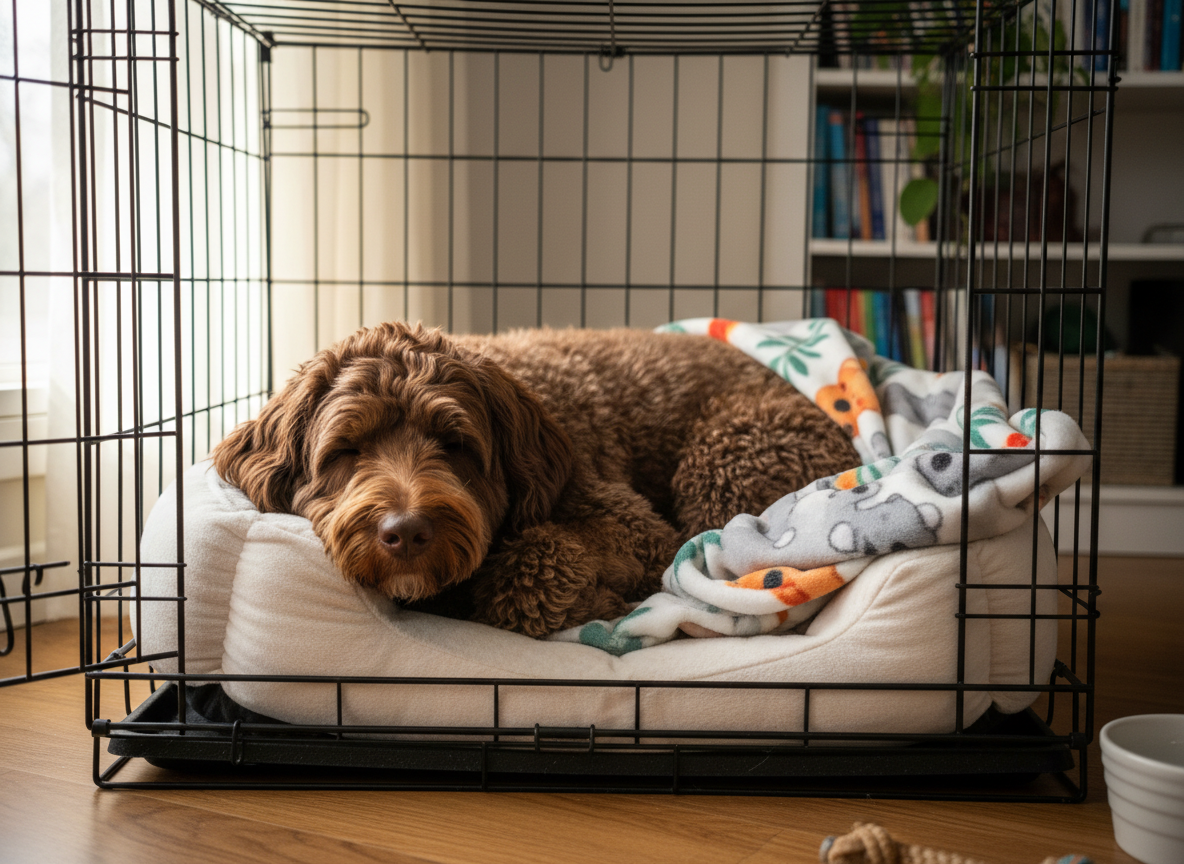
Puppy Culture introduces crates during the critical socialization period between three and eight weeks. This developmental window offers maximum learning capacity with minimal fear responses. Breeders place crates in puppy areas with doors removed and comfortable bedding inside. Puppies naturally investigate and begin napping in these den-like spaces.

By four weeks, puppies eat meals inside crates with doors remaining open. This builds positive food associations without confinement stress. At five to six weeks, doors close briefly during meal times, then gradually extend to short nap periods. By eight-week pickup, puppies understand crate equals rest time—a foundation Anderson families simply maintain.

River Forest families wanting head starts on training receive puppies already comfortable entering crates voluntarily. Small breeding programs allow individual puppy attention during crate introduction. Each puppy progresses at their own pace with daily socialization continuing throughout. Families receive detailed notes documenting each puppy's crate progress and preferences at pickup¹.

Proper Crate Size Prevents Accidents and Supports House Training Success

Crates should allow puppies to stand, turn around, and lie down comfortably—not much larger. Excess space enables potty accidents in back corners, defeating the primary house training purpose. Dogs instinctively avoid soiling their sleeping areas, but too-large crates create separate toilet and rest zones.

Medium Australian Labradoodles reaching 30-45 pounds as adults need 36-inch crates. Mini Labradoodles topping out at 17-25 pounds thrive in 30-inch crates. Adjustable dividers extend crate lifespan by starting small and expanding as puppies grow. This approach saves money versus buying multiple crates through puppyhood.

Western Village families shopping for first crates can find appropriate sizes at Anderson pet stores including Tractor Supply and Rural King. Many families successfully use cat carriers for eight to sixteen-week-old puppies, then transition to adult-sized crates around four to six months. The smaller carrier prevents accidents during early house training by limiting space appropriately¹.

The 2-1 Rule Guides Realistic Expectations for Puppy Bladder Control

Puppies hold their bladders approximately one hour per month of age during active daytime hours. An eight-week-old puppy manages roughly two hours maximum between bathroom breaks. A twelve-week-old puppy extends to three hours. This formula helps Glyn Ellen families plan realistic potty schedules around work and children's activities.

Add one additional hour for nighttime when puppies sleep. A ten-week-old puppy holding 2.5 hours during the day might manage 3.5-4 hours overnight in the crate. By eight weeks, most puppies receive final potty breaks around 10 p.m. and make it until morning without accidents. Realistic expectations prevent frustration and setup for success.

Working families often use lunch breaks for midday puppy releases. Remote workers—increasingly common in Anderson post-2020—make ideal puppy owners since they're home for frequent potty breaks. Anderson's suburban layouts with easy backyard access facilitate the frequent outdoor trips young puppies require during early training weeks¹.

Ignoring Night Crying Depends on Timing and Puppy's Developmental Stage

The first three nights in new homes, respond to night crying as genuine potty needs. Eight-week-old puppies legitimately cannot hold bladders all night despite daytime crate comfort. Take puppies outside calmly without play or excessive interaction. Return them to crates immediately after elimination.

After ten to twelve weeks when puppies physically can hold bladders overnight, brief settling whines become normal. This represents adjustment to sleeping alone rather than urgent needs. Ignoring these protests teaches self-soothing. Prolonged distress signals actual problems—too hot, too cold, genuinely needing bathrooms—requiring investigation.

Country Club Heights families concerned about waking children can place crates in bedrooms initially. Puppies feel secure near family members during adjustment periods. Indiana winter nights get cold; ensure crates aren't near drafty windows in older Anderson homes. Anderson's quiet neighborhoods mean less outside noise disrupting puppy sleep compared to urban settings¹.

Common Crate Training Mistakes Include Wrong Size and Inconsistent Routines

Mistake one: oversized crates allowing separate toilet and sleeping areas. Puppies naturally avoid soiling beds but will use distant crate corners as bathrooms when space permits. Use dividers or smaller temporary crates during house training phases. Mistake two: using crates as punishment. Sending puppies to crates after misbehavior creates negative associations destroying training progress.

Mistake three: inconsistent schedules confusing puppies about expectations. Edgewood families crating during workdays but not evenings send mixed messages. Puppies need consistent routines establishing when crate time occurs. Small-town lifestyle sometimes means casual approaches, but crate training requires structure.

Pre-started puppies from Anderson breeders arrive with foundations established. Families simply maintain consistency rather than starting from zero. Never force puppies into crates—coax with treats and toys instead. Never leave puppies crated longer than age-appropriate bladder control allows. Never respond to manipulative whining once potty training completes¹.

Walls Family Doodles Crate Training Approach

Walls Family Doodles follows comprehensive Puppy Culture crate training protocols starting at three weeks. Puppies receive daily crate exposure building positive associations through meals, naps, and play sessions. By eight-week pickup, puppies should sleep comfortably through nights in crates with proper routines.

One key tip: throw blankets over crates if puppies struggle after coming home. The den-like darkness often settles anxious puppies immediately. Even Puppy Culture-raised dogs may whine initially in new environments—this represents normal adjustment rather than training failure. The advice: power through those first few nights. Puppies are still babies adjusting to major life changes.

Eight-week-old puppies should receive final potty breaks around 10 p.m., then make it until morning without crate accidents. Using appropriately small crates prevents the common mistake of puppies designating one half for sleeping and one half for toileting. Cat carriers work excellently for new puppies from eight weeks through four to six months when larger crates become necessary.

These approaches, combined with Puppy Culture's early introduction, mean Anderson families receive puppies already comfortable with crate concepts. Families maintain consistency and adjust to individual puppy needs as house training progresses.

FAQs

Q: Should Australian Labradoodles be crate trained in Anderson?

Yes. Crate training provides safe spaces during unsupervised time, accelerates house training by leveraging den instincts, and prevents destructive chewing behaviors. Essential for working families and first-time owners, crates offer management tools during puppy development. Australian Labradoodles adapt quickly due to intelligence and people-pleasing temperament.

Q: How long does it take to crate train an Australian Labradoodle?

Two to four weeks for basic acceptance when starting at eight weeks. Pre-conditioned puppies from Anderson breeders using Puppy Culture adapt within days since crate exposure began at three weeks. Individual puppies vary—some settle immediately while others need gradual progression. Consistency and positive associations determine success speed.

Q: What size crate for Australian Labradoodle in Anderson?

Medium size (30-45 pounds): 36-inch crate. Mini size (17-25 pounds): 30-inch crate. Buy adjustable crates with dividers to grow with puppies and save money. Cat carriers work excellently for eight to sixteen-week-old puppies before transitioning to adult-sized crates around four to six months.

Q: What is the 2-1 rule for crate training?

Puppies hold bladders one hour per month of age during daytime, plus one additional hour at night when sleeping. Ten-week-old puppy equals 2.5 hours day, 3.5 hours night. This formula guides realistic bathroom break schedules preventing accidents and frustration for Anderson families.

Q: Can I get an Australian Labradoodle if I work 9-5 in Anderson?

Yes with planning. Lunch break potty visits or hiring dog walkers provide midday relief. Crate training prevents accidents during unsupervised hours. Pre-started puppies adjust faster than completely untrained dogs. Many Anderson families successfully manage with full-time jobs using realistic schedules and proper crate sizing.

Q: Should I ignore my puppy crying at night in the crate?

First week: respond to genuine potty needs—puppies cannot hold bladders all night initially. After ten to twelve weeks: brief settling whines are normal adjustment, ignore them. Prolonged crying signals real problems (too hot, too cold, needs bathroom) requiring investigation. Place blankets over crates to create den-like darkness helping anxious puppies settle.

References

"Crate Training." Indoor Pet Initiative, Ohio State University College of Veterinary Medicine, https://indoorpet.osu.edu/dogs/puppy/crate-training.