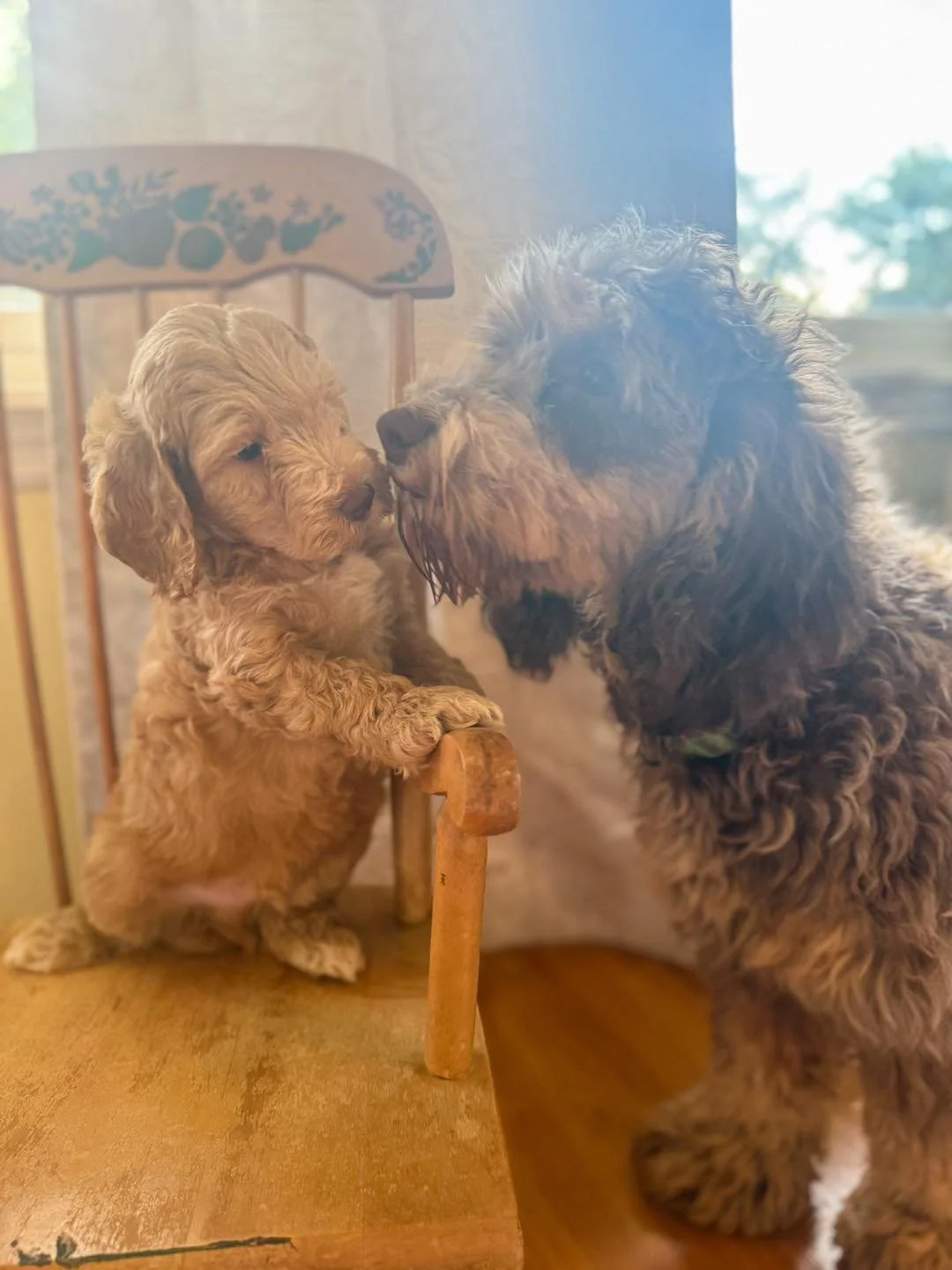
Do Mini Australian Labradoodles Shed? The Truth About Low-Shedding vs. Non-Shedding Coats
Do mini Australian Labradoodles shed? The short answer is yes. But they shed far less than most breeds. The long answer depends on coat type, grooming routine, and whether the breeder tells you the truth about "hypoallergenic" claims.
This guide explains exactly how much mini Australian Labradoodles shed. You'll learn which coat types shed least. You'll also discover what brushing and grooming schedule keeps loose hair under control. You'll see the difference between fleece, wool, and hair coats. You'll learn why some breeders promise "zero shedding." You'll find out what weekly grooming looks like in practice.
Do mini Australian Labradoodles shed much?
Mini Australian Labradoodles shed minimally but not zero. Shedding depends on coat type:
Fleece coat (most common): Very low shedding with wavy texture. Loose hair sheds into the coat rather than onto floors. Needs brushing 3 times per week to prevent matting.
Wool coat: Minimal shedding with tight curls. Most allergy-friendly option. Requires professional grooming every 6 to 8 weeks.
Hair coat (rare in multi-gen): Moderate shedding with straighter texture. Less allergy-friendly than fleece or wool.
No dog is 100% hypoallergenic. Dander (skin flakes), not just hair, triggers allergies.¹ Fleece and wool coats trap dander in the coat. This reduces airborne allergens but requires regular grooming.
See our fleece-coat parent dogs
The Truth About Mini Labradoodle Shedding: Minimal, Not Zero
All dogs shed some amount. Mini Australian Labradoodles shed far less than Labs, Goldens, or German Shepherds. Fleece-coat mini Labradoodles shed loose hair into their coat. The wavy texture catches it. You won't see it on furniture like you would with short-haired breeds.
You'll find occasional hair on clothing or furniture. But you won't see clumps or heavy seasonal shedding. "Non-shedding" claims are false. Breeders who promise zero shedding oversell. Multi-generation Australian Labradoodles have more predictable coat types. They produce fleece or wool coats reliably.
F1 crosses can inherit straight, high-shedding Lab coats. This happens because genetics are unpredictable in first-generation crosses. The Labrador parent contributes genes for heavy shedding. Some F1 puppies get those genes instead of the Poodle's low-shedding genes.
We tell families to expect some loose hair. Maybe a few strands on the couch or in the car. But compared to a Golden Retriever, it's night and day. We previously owned Goldendoodles that shed far more than our Australian Labradoodles.
Mini Labradoodle Coat Types and Shedding Levels
Fleece coat: Soft and wavy texture. Very low shedding. This is the most desirable coat in multi-gen lines. It feels like angora. Needs regular brushing to prevent mats.
Wool coat: Tight curls like a Poodle. Minimal shedding. Most allergy-friendly option. High-maintenance grooming because curls mat quickly. Daily brushing keeps coats healthy.
Hair coat: Straighter texture with moderate shedding. Uncommon in multi-gen dogs. More common in F1 and F1B crosses. Not ideal for allergy families. This coat sheds more like the Labrador or Cocker Spaniel parent.
Coat type comes from genetics. Good breeders select fleece-coat parents. This produces fleece-coat puppies reliably. Puppy coat at 8 to 12 weeks looks different from adult coat. Final texture develops at 10 to 14 months. The coat changes gradually as puppies mature.
Fleece coat: Very low shedding with wavy, soft texture. Best for most families. Brush 3 times per week.
Wool coat: Minimal shedding with tight curls. Best for severe allergies. Brush daily.
Hair coat: Moderate shedding with straight or wavy texture. Not allergy-friendly. Brush 2 times per week.
Are Mini Australian Labradoodles Hypoallergenic? The Real Story
"Hypoallergenic" is a marketing term, not a medical guarantee. All dogs produce dander (dead skin cells) and saliva proteins that trigger allergies.¹ The primary dog allergen comes from salivary glands. Dogs deposit it on fur through licking.¹
Low-shedding coats reduce airborne allergens. Dander stays trapped in hair rather than floating around the home. People with mild dog allergies often handle fleece and wool-coat Labradoodles well. Severe allergies may still react.
Protein allergens in saliva and dander cause reactions, not hair itself.¹ This means even hairless dogs can trigger allergies. We recommend spending time with the specific breed before buying. Visit parent dogs. Handle puppies if possible. Spend 30 minutes or more with adult dogs.
Some family members cannot have dogs with any dander. Yet our Australian Labradoodles don't trigger their allergies. Multiple dogs present simultaneously caused no reactions. This is why the breed was developed. But results vary by person.
We encourage families with allergies to visit. Spend time with our adult dogs. If they react, we'll help them find a better-suited breed. This honesty protects families from making expensive mistakes.
Grooming Steps to Manage Shedding and Matting
Brushing frequency: Fleece coats need brushing 3 times per week. Sessions take 10 to 15 minutes. Wool coats need daily brushing to prevent mats. Mats form when loose hair tangles with growing hair.
Professional grooming: Schedule every 6 to 8 weeks. Services include haircut, bath, nail trim, and ear cleaning. Anderson area groomers charge $60 to $80 per visit. This matches what we shared about local grooming costs.
Bathing at home: Bathe every 4 to 6 weeks with dog shampoo. Human shampoo dries skin. Dry skin increases shedding. Use gentle formulas made for dogs.
Tools needed: Buy a slicker brush and metal comb. Add detangling spray. Initial investment costs about $40. Quality tools last for years.
Why brushing matters: Mats trap shed hair close to skin. Regular brushing releases loose hair before it becomes visible around the home. Brushed dogs shed less onto furniture and clothing.
We send every puppy home with a slicker brush. We show families how to brush during pickup. Starting this routine early prevents matting problems later. Puppies learn to accept grooming from a young age.
Living with a Mini Labradoodle: What to Expect Daily
You'll find occasional stray hairs on dark clothing or furniture. This happens more during seasonal coat changes in spring and fall. The undercoat adjusts to temperature changes. More loose hair releases during these times.
Regular vacuuming 1 to 2 times per week keeps floors clean. Robot vacuums work well for daily maintenance. They pick up stray hairs before they accumulate. Lint rollers or pet hair remover tools handle clothing and upholstery quickly.
Dogs who swim, play in mud, or go to dog parks bring more hair into the home. Environmental debris sticks to the coat. Grass, leaves, and dirt cling to wavy fleece coats. A quick brush after outdoor play removes this debris.
Well-groomed mini Labradoodles shed less than poorly groomed ones. Neglected coats mat badly. Mats pull and release more hair. Regular brushing keeps the coat healthy. Healthy coats shed less overall.
Schedule a visit to meet our low-shedding dogs
Mini Labradoodle Shedding vs Other Low-Shedding Breeds
Mini Poodle: Minimal shedding with tight curls. High-maintenance grooming needs. Similar to wool-coat Labradoodles. Poodles need professional grooming every 4 to 6 weeks. Daily brushing prevents mats.
Bichon Frise: Very low shedding. Strong hypoallergenic reputation. Requires professional grooming every 4 to 6 weeks. Daily brushing keeps the fluffy white coat clean. Small size suits apartment living.
Mini Goldendoodle (F1): Highly variable shedding. Can inherit Golden Retriever's heavy shedding. Can also get Poodle's low shedding. First-generation genetics are unpredictable. Some F1s shed like purebred Goldens.
Shih Tzu: Minimal shedding but long, high-maintenance coat. Daily brushing required to prevent tangles. Professional grooming every 6 to 8 weeks. The silky coat mats easily without care.
Multi-gen Australian Labradoodles offer more predictable low-shedding coats than F1 doodles. We breed fleece to fleece. This creates consistent coat types across litters. Families know what to expect.
Mini Australian Labradoodle (multi-gen): Very low shedding with moderate grooming needs (brush 3 times per week). High coat predictability across litters.
Mini Poodle: Minimal shedding with high grooming needs (brush daily). High coat predictability.
Bichon Frise: Very low shedding with high grooming needs (professional groom every 4 to 6 weeks). High coat predictability.
Mini Goldendoodle (F1): Variable shedding with moderate grooming needs. Low coat predictability due to unpredictable genetics.
Want to know what makes these coats truly work for allergies? Learn about the science behind hypoallergenic dogs and whether mini Australian Labradoodles are right for your family: Mini Australian Labradoodle Temperament: Perfect Family Dog or Overhyped?
References
¹ "Allergic to your dog? Easy tips to prevent and control your allergy." The Ohio State University College of Veterinary Medicine, vet.osu.edu/sites/default/files/documents/allergic%20to%20your%20dog.pdf.