Early Neurological Stimulation for Puppies in Anderson, IN – Building Stronger, More Resilient Dogs

In Anderson, responsible dog breeders use Early Neurological Stimulation to give puppies the best start in life. ENS involves five gentle stress exercises performed daily between days 3 and 16 after birth (1). These exercises improve stress tolerance, strengthen cardiovascular performance, and enhance problem-solving ability in adult dogs (2). You'll learn when ENS happens, what the exercises include, and how this protocol prepares puppies for Indiana families. As a trusted dog breeder at Walls Family Doodles, we apply ENS protocols to every litter raised at our Anderson facility.

Early Neurological Stimulation Improves Stress Tolerance in Newborn Puppies

Families in Anderson adopting their first puppy need dogs that handle everyday stress without fear or anxiety. Puppies exposed to ENS recover faster from startling events and show less fear-based behavior as they grow (3). This creates a foundation for confident adult dogs that adapt to Anderson's active family routines.

Anderson's summer storms and neighborhood fireworks during Fourth of July and New Year's test young dogs. Puppies with ENS conditioning tolerate loud noises better than non-stimulated litter mates (4). When thunderstorms roll through Madison County or fireworks echo across Westside and Southside neighborhoods, ENS-trained puppies remain calmer and settle faster.

We see this difference in homes with children, where unexpected sounds and movement happen throughout the day. ENS puppies adjust to household activity without becoming overwhelmed. You get a dog that fits into your family life instead of hiding or reacting fearfully to normal events.

A puppy lying on a cozy white blanket on a windowsill, with raindrops on the window and a blurred outdoor scene in the background.

ENS Exercises Strengthen Cardiovascular and Immune Systems During Critical Development Windows

Puppy buyers in Anderson who prioritize long-term health want dogs with strong immune systems and cardiovascular performance. The five ENS exercises—tactile stimulation, head held erect, head pointed down, supine position, and thermal stimulation—trigger early improvements in circulation and disease resistance (5). Each exercise lasts three to five seconds and creates mild stress that strengthens these systems (6). Research published in peer-reviewed veterinary journals confirms these physiological benefits in controlled studies.

Puppies show stronger heart rates and better disease resistance during Indiana's cold and flu season for dogs (7). Anderson's temperature swings between winter lows and humid summers demand robust immune function. ENS prepares puppies for climate stress before they leave our facility at 8 to 10 weeks old.

Owners planning active lifestyles with their dogs benefit most from this early conditioning. Whether you walk trails along Killbuck Creek or attend outdoor events in Anderson parks, your puppy starts with a stronger physical foundation.

A person holding a tiny, sleeping puppy wrapped in a white towel over a wooden surface.

Puppies Receiving ENS Adapt Faster to New Homes and Training Routines

New owners in Anderson, Noblesville, and Carmel starting crate training and housebreaking see faster results with ENS puppies. These puppies settle into routines quicker with less whining, faster crate acceptance, and fewer accidents (8). Enhanced learning ability makes basic commands like sit, stay, and come easier to teach (9).

Anderson's suburban layout requires leash manners and car travel for vet visits and errands. ENS dogs handle these transitions better than puppies without early stimulation (10). When you bring your puppy home, the adjustment from our breeding environment to your family home with multiple rooms, stairs, and activity happens more smoothly.

Families enrolling puppies in obedience classes at local Anderson training facilities notice the difference during first sessions. ENS puppies focus better and respond faster to new instructions (11). You spend less time managing anxiety and more time building skills your dog will use for years.Puppies raised near Shadyside and Edgewood neighborhoods adapt quickly to busy Anderson household routines. Our program introduces puppies to different surfaces, obstacle navigation, and problem-solving exercises that build mental strength. We begin gentle grooming and nail trimming early so your puppy accepts these routines without stress. Each puppy experiences controlled challenges that teach recovery and resilience. You receive a puppy already familiar with crates, comfortable being handled, and ready to continue training in your home. Learn more about early puppy socialization from the American Kennel Club.

A fluffy golden retriever puppy standing on a white tiled kitchen floor, looking upward, with sunlight streaming in.

Breeders Apply ENS Between Day 3 and Day 16 to Maximize Neurological Benefits

Buyers in Anderson researching breeder practices before committing to a deposit want transparency about early puppy care. We perform ENS during a precise 14-day window when neurological systems respond most to controlled stress (12). Starting too early or too late reduces effectiveness, so we follow science-backed timing with every litter.

Day 3 marks the beginning because puppies' neurological systems are ready to benefit from mild stimulation (13). By day 16, the critical development window closes and additional ENS sessions provide no extra advantage (14). We document each session with dates and notes so you see exactly when your puppy received this protocol.

Indiana's breeding community increasingly adopts ENS as a standard practice for quality litters. Reputable Anderson breeders share ENS timelines with buyers during facility visits or through puppy update emails. You deserve to know how your puppy was raised during those first weeks of life. See our available puppies to learn about specific litters currently receiving ENS.

Seven puppies in a white plastic pet carrier on a table, with some grooming papers and pens nearby.

Early Neurological Stimulation Complements Socialization and Health Protocols in Quality Breeding Programs

Prospective owners comparing breeders in Anderson and surrounding Madison County areas should look for comprehensive early puppy care. ENS works alongside vet exams, deworming, early sound exposure, and human handling to give puppies the best foundation (15). You benefit from layered development, not just one protocol but a complete approach.

We coordinate with local veterinarians for health checks during the ENS period. Puppies receive their first vet exam, deworming treatments, and initial vaccinations while we continue daily ENS exercises. This ensures both neurological development and physical health progress together during those critical first weeks.

Before you take your puppy home, we provide documentation showing ENS logs, vaccination records, and socialization activities. Families in Fishers and Noblesville ask to review these records during breeder visits, and we welcome those conversations. You see proof of the care your puppy received from day 3 through adoption day. If you're ready to bring home a puppy raised with ENS and comprehensive early care protocols, start your application today.

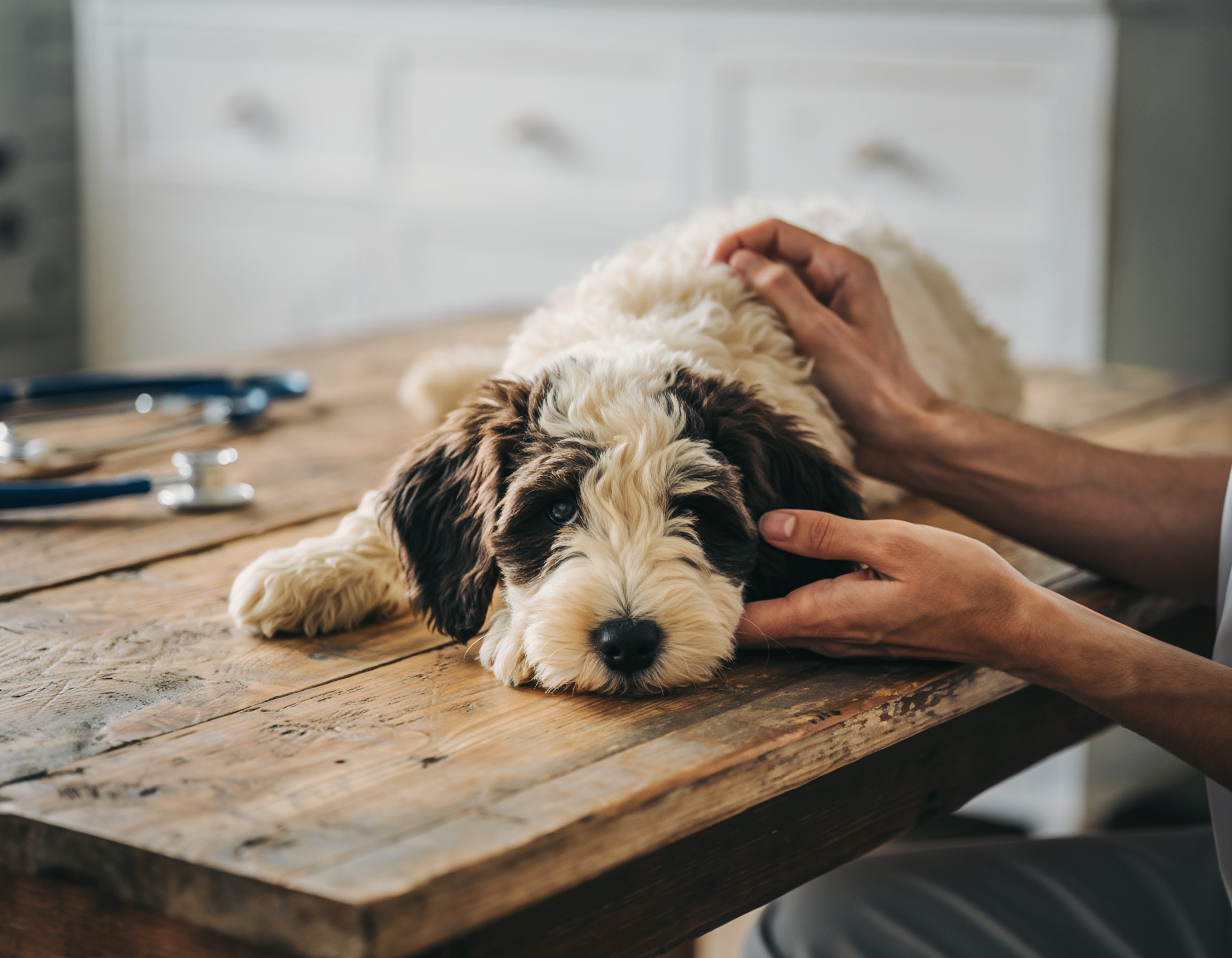
A veterinarian examining a cute, fluffy puppy lying on a rustic wooden table inside a veterinary clinic, with medical tools in the background.

FAQs

Q1: When do dog breeders start Early Neurological Stimulation on puppies?

Dog breeders start Early Neurological Stimulation on day 3 of a puppy's life and continue through day 16 (16). We perform daily sessions lasting 15 to 25 seconds total per puppy. Each of the five exercises takes three to five seconds to complete (17).

Q2: How does Early Neurological Stimulation help puppies adjust to Indiana's climate?

The thermal stimulation exercise prepares puppies for temperature changes by exposing them to a cool damp towel for brief periods (18). This improves cold and heat tolerance before adoption. Indiana's winter lows and humid summers require dogs that adapt to temperature swings.

Q3: Can I see proof that my puppy received ENS training?

Reputable breeders provide ENS logs with dates, times, and notes for each session (19). Ask to review these records during your breeder visit or request them before finalizing your deposit. We share our ENS documentation with all puppy buyers at Walls Family Doodles in Anderson.

Q4: Does Early Neurological Stimulation replace socialization for puppies?

No, ENS complements socialization but does not replace it (20). Breeders should do both—ENS for neurological benefits during days 3 through 16, and socialization for behavior development from week 3 onward. Your puppy needs exposure to sounds, people, and handling in addition to ENS exercises.

Q5: Which dog breeds benefit most from ENS in Noblesville and Carmel breeding programs?

All breeds benefit from Early Neurological Stimulation (21). Working, sporting, and guardian breeds common in Indiana—such as Labs, Goldens, and German Shepherds—show particularly strong results. Doodle breeds like Australian Labradoodles also respond well to ENS protocols.

Q6: What happens if a breeder skips Early Neurological Stimulation?

Puppies miss the critical development window and may show lower stress tolerance and slower learning compared to ENS litter mates (22). The benefits of ENS cannot be replicated after day 16 (23). Choosing a breeder who performs ENS gives your puppy advantages that last a lifetime.

References

  1. Carmen L. Battaglia, "Periods of Early Development and the Effects of Stimulation and Social Experiences in the Canine," Journal of Veterinary Behavior 4, no. 5 (2009): 203–210.

  2. G. Baqueiro et al., "The Effect of Early Neurological Stimulation on Puppy Welfare in Commercial Breeding Kennels," Animals 13, no. 1 (2023): 71.

  3. Ibid.

  4. Ibid.

  5. Battaglia, "Periods of Early Development," 205.

  6. Ibid., 206.

  7. Baqueiro et al., "Effect of Early Neurological Stimulation," 71.

  8. Ibid.

  9. A. Schoon and T. G. Berntsen, "Evaluating the Effect of Early Neurological Stimulation on the Development and Training of Mine Detection Dogs," Journal of Veterinary Behavior 6, no. 2 (2011): 152.

  10. Baqueiro et al., "Effect of Early Neurological Stimulation," 71.

  11. Schoon and Berntsen, "Evaluating the Effect," 153.

  12. Battaglia, "Periods of Early Development," 204.

  13. Ibid.

  14. Ibid., 205.

  15. Ibid., 206; American Kennel Club, "Puppy Socialization Starts with the Breeder: Early Neurological Stimulation," accessed November 17, 2025, https://www.akc.org/expert-advice/dog-breeding/breeder-puppy-socialization-early-neurological-stimulation/.

  16. Battaglia, "Periods of Early Development," 204.

  17. Ibid., 205.

  18. Ibid.

  19. American Kennel Club, "Puppy Socialization Starts with the Breeder."

  20. Battaglia, "Periods of Early Development," 207.

  21. Baqueiro et al., "Effect of Early Neurological Stimulation," 72; Schoon and Berntsen, "Evaluating the Effect," 154.

  22. Baqueiro et al., "Effect of Early Neurological Stimulation," 73.

  23. Battaglia, "Periods of Early Development," 205.