
Pricing Guide
Mini Australian Labradoodle Puppy Cost in Anderson, IN: What $3,200 Includes (2026 Pricing Guide)
A mini or medium Australian Labradoodle from us costs $3,200. That is a $500 deposit when you pick your puppy at 6 weeks and a $2,700 balance by pickup at 8 weeks. Here is exactly what that price covers.
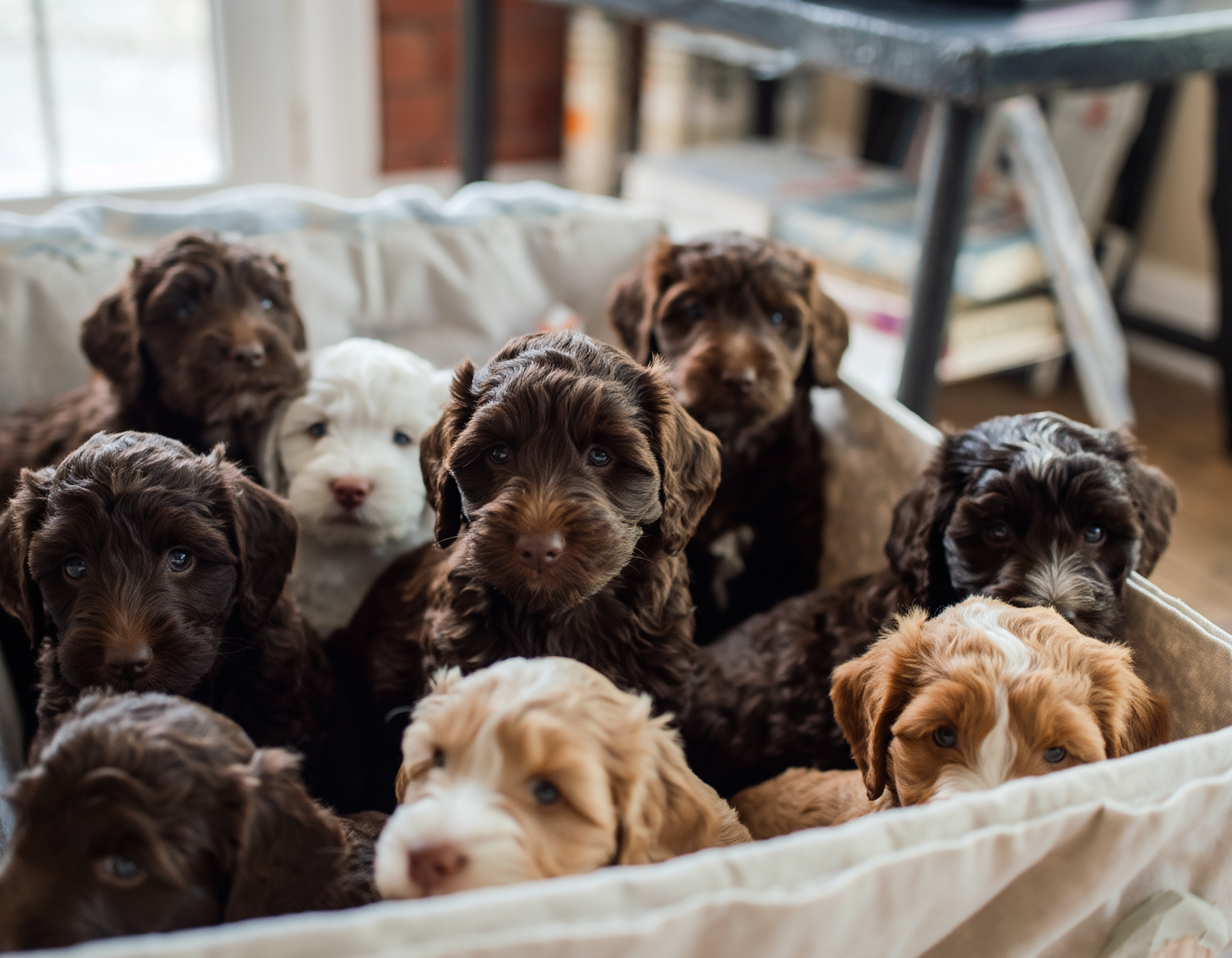
What does $3,200 include?
Here is what comes with every puppy. You can also see it all on our pricing and details page.
- Health-tested parents. Every parent is tested and cleared for OFA hips, elbows, and eyes, plus a full Orivet genetic panel.
- A 2-year health guarantee in writing. You can read the contract and guarantee before you apply.
- A vet health check before your puppy goes home, plus vaccination and deworming records.
- WALA registration.
- Puppy Culture raising in our home, including a litter box and crate naps before 8 weeks.
- A starter kit with 5 pounds of puppy food, a collar and leash, training treats, a chew toy, a blanket with mom's scent, shampoo and conditioner samples, and a 30-day trial of Trupanion pet insurance.
- Lifetime breeder support and a spot in our puppy family group.
- Access to our in-home boarding for $30 a night, only for our puppy families.
How does paying for a puppy work?
- ApplyFill out an application. We read every one ourselves.
- Join the waitlistOnce you are approved, we place you on the waitlist for an upcoming litter.
- Pick at 6 weeks and pay the $500 depositPicks go in waitlist order. The deposit holds the puppy you chose.
- Pay the $2,700 balanceThe balance is due by pickup. We take GoodDog, Zelle, Venmo, or cash.
- Bring your puppy home at 8 weeksPick up at our home in Anderson, or we deliver free within about an hour.
Do size or color change the price?
No. Minis and mediums are the same price, and so are reds, tricolors, partis, and every other color. A rare coat does not cost us anything extra to raise, and we do not want to reward breeding for color over health.
Why do Australian Labradoodles cost more than other doodles?
So where does the money go? Mostly into things you cannot see in a puppy picture. Health testing the parents, registration, vet care, food, and eight weeks of daily work with a litter all cost money before a single puppy goes home.
An Australian Labradoodle also comes from a multigenerational breed, not a first cross. In other words, you are paying for predictability in size, coat, and temperament, along with the testing that backs it up. You can read more in multi-gen vs. F1 Labradoodles.
What does the first year cost beyond the puppy?
The purchase price is only the start. Plan for these too:
- A crate, bed, bowls, harness, and toys
- Food, treats, and chews
- Vet visits, the rest of the puppy vaccines, and flea, tick, and heartworm prevention
- Spay or neuter surgery
- Professional grooming every 6 to 8 weeks, plus a brush and comb for home
- A puppy training class
- Pet insurance, if you choose to keep it after the trial
Prices vary a lot by vet and groomer, so call a couple of each near you for real numbers before you commit.
How do you spot a price that is too good to be true?
A lower price is not always a scam. However, it usually means something was skipped. Watch for these:
- No OFA or genetic results for the parents, or results they will not show you
- No chance to meet the mom or see where the puppies are raised
- Puppies going home before 8 weeks old
- No written health guarantee
- No registration papers, or vague answers about the generation
- Pressure to send a deposit before you have asked your questions
Our guide to visiting a breeder has a full list of questions to ask.
When is the next litter?
Puppies go home at 8 weeks old. Click here to see when our next litters are due.
Common questions about Australian Labradoodle prices
How much is an Australian Labradoodle puppy from Walls Family Doodles?
$3,200. That is a $500 deposit when you pick your puppy at 6 weeks and a $2,700 balance due by pickup.
Do minis and mediums cost the same?
Yes. Every puppy is the same price whatever the size, color, or pattern.
How can I pay?
We take GoodDog, Zelle, Venmo, or cash.
Is delivery included?
Delivery is free within about an hour of Anderson. Farther than that depends on the distance. See how delivery works.
What does a puppy come with?
A vet health check, vaccination and deworming records, WALA registration, a 2-year health guarantee, and a starter kit with food, a collar and leash, treats, a chew toy, and a blanket that smells like mom and the litter.
Why are some Labradoodle puppies so much cheaper?
Usually because something was skipped, most often health testing on the parents, registration, or structured early socialization. Ask to see the parents' results before you pay a deposit anywhere.
Ready to apply?
We read every application ourselves and will be in touch about the waitlist and upcoming litters.
Related reading: the honest cons of owning an Australian Labradoodle.