
Potty Training Australian Labradoodle Puppies in Anderson, IN | Pre-Started Routines
In Anderson, Australian Labradoodle puppies begin litter box conditioning at three weeks using Puppy Culture methods. This page covers early litter training, outdoor transition, crate-based schedules, substrate preferences, timeline expectations, and accident prevention. Puppies go home with foundation understanding of designated elimination areas and established routines. Pre-started potty training through proven protocols significantly shortens housebreaking and reduces puppy blues for Anderson families.
Australian Labradoodles Learn Potty Training Faster Than Many Breeds With Proper Start
Australian Labradoodles' intelligence and eagerness to please accelerates potty training compared to stubborn breeds. Most achieve daytime reliability by four months versus six to eight months for difficult breeds. Pre-started litter box conditioning means puppies already understand designated elimination areas at eight-week pickup.
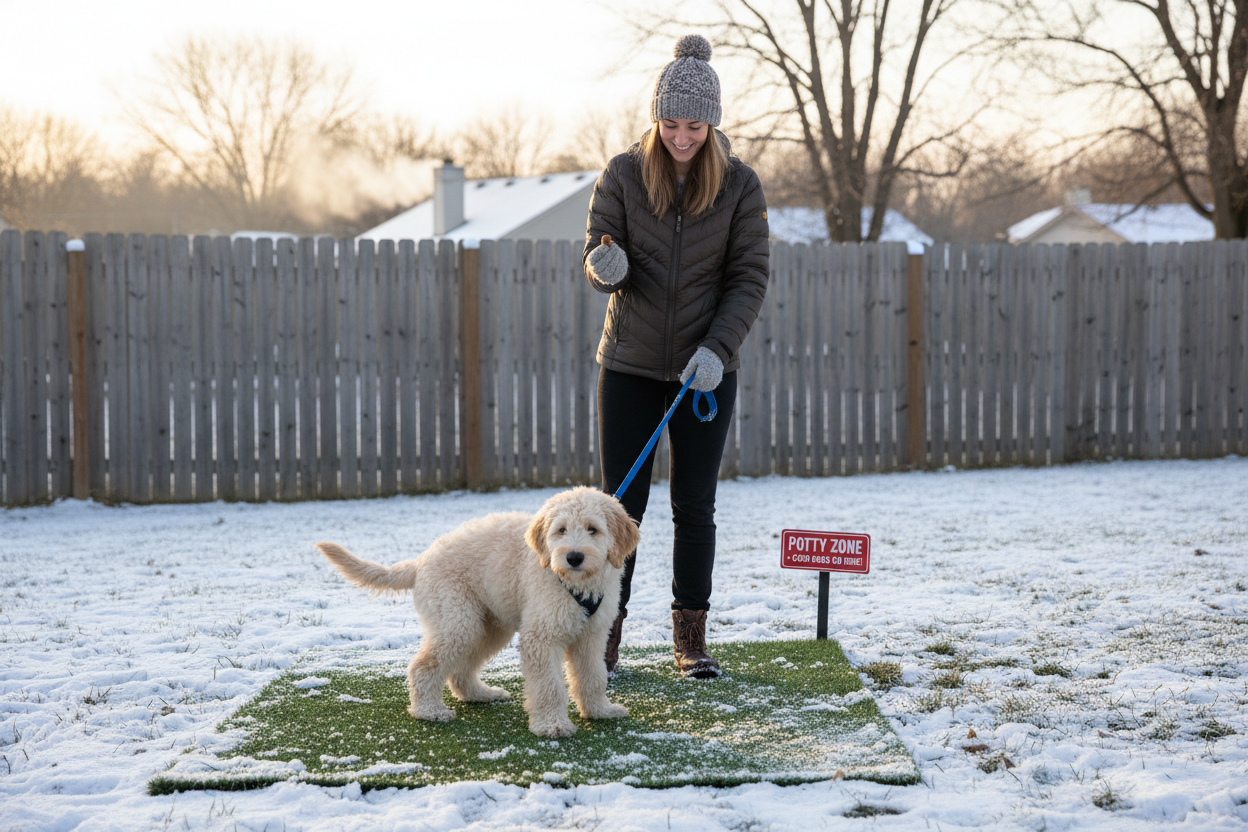
Anderson's suburban yards provide ideal outdoor training environments once families bring puppies home. Cold Indiana winters require commitment to frequent outdoor trips even in snow. Puppies raised in home environments (not kennels) already understand indoor cleanliness standards before leaving Edgewood breeder facilities.
Families in Downtown Anderson report minimal accidents during housebreaking. The breed's natural desire to keep sleeping areas clean combines with early litter training to create easier transitions. Puppies naturally avoid eliminating where they sleep or eat, making this instinct valuable for successful housetraining Indoor Pet Initiative¹. Your Australian Labradoodle arrives understanding this concept.
Outdoor Potty Conditioning Begins at 5 Weeks Before Puppies Leave for New Homes
Puppy Culture protocols introduce outdoor elimination during critical learning windows between five and eight weeks. Puppies experience outdoor grass exposure alongside litter box use during this transition period. This dual approach establishes grass substrate preference before puppies encounter indoor flooring temptations.
River Forest families benefit from detailed notes on each puppy's potty patterns and signals before pickup. Small breeding programs provide individual attention during outdoor sessions. Anderson's location allows year-round outdoor exposure despite weather fluctuations.
Litter box training begins at three weeks when puppies become mobile. Wood pellets or paper create designated elimination zones separate from sleeping and eating areas. By eight weeks, puppies eliminate in litter boxes approximately 90% of the time when supervised. The foundation transfers quickly to outdoor grass once families establish consistent routines in Western Village yards.
The Eat-Play-Potty-Sleep Cycle Establishes Consistent Schedule for Success
The most effective potty training schedule follows a predictable cycle: feed meals, play for five minutes, take outside to potty, allow additional play until tired (about one hour total), then crate for nap. Puppies wake and go straight outside to eliminate. This pattern prevents accidents by anticipating needs before urgency hits.
Take puppies outside immediately after waking from any sleep period. Puppies typically need to eliminate after eating, naps, strenuous play, or whenever there is a change of activity Indoor Pet Initiative¹. Three-month-old puppies can hold elimination for three to four hours during the day but require more frequent breaks initially.
Glyn Ellen families juggling work schedules find success with this predictable routine. Remote workers common in Anderson post-2020 maintain strict schedules easily. Suburban layouts allow quick backyard access versus urban challenges. Consistency matters more than perfection—every successful outdoor elimination reinforces the desired behavior and accelerates learning.
Crate use remains essential even if you don't plan long-term crate confinement. Puppies naturally avoid soiling sleeping areas, making crates powerful housetraining tools. Always take puppies outside on leash during training to deliver immediate praise and treats after elimination.
Substrate Preference Training Teaches Puppies to Prefer Grass Over Indoor Surfaces
Puppies prefer surfaces matching early experiences—grass, concrete, pee pads, or litter materials. Early grass exposure creates strong preferences for outdoor elimination. Avoid pee pads if possible since they teach indoor elimination is acceptable and make outdoor transitions difficult.
Country Club Heights families using pee pads during winter often struggle switching to outdoor later. Pre-conditioned puppies already prefer grass before experiencing indoor flooring temptations. Dogs generally like to eliminate where they have done so before, so taking your dog to the same place every time creates both visual and olfactory cues Indoor Pet Initiative¹. Choose one potty spot in your Anderson yard and use it consistently.
Indiana's grassy yards prove ideal for natural substrate preference development. The litter box foundation helps puppies understand designated areas exist for elimination. When families transition to outdoor-only training, spreading used litter pellets in the chosen grass spot provides familiar scent cues.
Carpet and rugs create confusion for puppies learning substrate preferences. Older Anderson homes with carpeted areas require extra vigilance. Enzyme cleaners (available at Rural King or Pet Supplies Plus locally) remove scent markers that attract repeat accidents. Every indoor accident teaches puppies that option exists—prevention through supervision beats correction every time.
Most Australian Labradoodles Achieve Daytime Reliability by 16-20 Weeks
Realistic timeline expectations help families stay patient during training. Daytime reliability (holding four to five hours between breaks) typically arrives by four to five months. Nighttime reliability (sleeping six to eight hours) follows two to four weeks after daytime success. Pre-started puppies from Walls Family Doodles often achieve milestones two to four weeks faster than untrained puppies.
Some puppies take slightly longer—up to six months for complete reliability. Individual variation exists even within litters. Families maintaining midday bathroom breaks through five to six months see better consistency. Cold winters slow progress slightly since puppies resist going outside in snow and require extra patience.
Anderson buyers report their Australian Labradoodles have minimal house accidents compared to previous dogs. The combination of breed intelligence, Puppy Culture foundation, and litter training creates accelerated timelines. By four months, most puppies signal when they need outside or wait for scheduled breaks.
As a general rule, puppies can hold elimination for one hour for each month of age Indoor Pet Initiative¹. Your three-month-old puppy manages three to four hours during active daytime. Overnight, puppies often hold longer since sleep reduces urgency. Expect occasional accidents through six months—this remains normal puppy development.
Preventing Accidents Works Better Than Correcting Them After They Happen
Management through crate confinement, constant supervision, and frequent outdoor breaks prevents accidents before they occur. Corrections after the fact don't work since puppies can't connect punishment to earlier actions. Every indoor accident teaches puppies that indoor elimination is an option—prevention proves critical.
Frustrated Edgewood owners dealing with repeated accidents often accidentally create fear through improper corrections. Dogs scolded for eliminating indoors may avoid eliminating when any person is present, making outdoor training more difficult Indoor Pet Initiative¹. Puppies need to feel safe eliminating in front of you during outdoor sessions.
Small-town living sometimes encourages casual supervision, but potty training requires focused attention. Tether puppies to you with a six-foot leash when you can't provide direct supervision. Watch for elimination signals: sniffing, circling, sudden stillness, or moving toward doors. Interrupt gently and rush outside immediately.
Clean all accidents thoroughly with enzyme cleaners to remove scent markers. Regular cleaners don't eliminate odors that attract puppies back to the same spots. Local pet stores in Anderson carry Nature's Miracle and similar products. Never punish puppies for accidents you didn't witness happening—they won't understand the connection and may become fearful.
FAQ
Q: Are Australian Labradoodles hard to potty train in Anderson?
No—breed intelligence and eagerness to please makes training easier than many breeds. Most achieve daytime reliability by four to five months with consistent schedules and pre-started litter box foundation. Anderson families report minimal house accidents compared to other breeds they've owned.
Q: How long do Australian Labradoodles take to potty train?
Daytime reliability typically arrives at four to five months (16-20 weeks). Nighttime reliability follows at five to six months. Pre-conditioned puppies from Anderson breeders using Puppy Culture often achieve milestones two to four weeks faster than puppies without early training.
Q: What is the eat-play-potty-sleep schedule for puppies?
Feed meals, play five minutes, take outside to potty, allow additional play until tired (about one hour total), then crate for nap. Puppies wake and go straight outside. This cycle prevents accidents by anticipating needs and establishes predictable routines Anderson families can maintain.
Q: How do you stop a dog from peeing and pooping in the house?
Prevent through supervision and crate use when you can't watch directly. Increase outdoor frequency to every one to two hours initially. Reward outdoor elimination immediately with praise and treats. Clean accidents with enzyme cleaner to remove scent markers. Correction after accidents doesn't work.
Q: Should I use pee pads for Australian Labradoodle potty training?
No—pee pads teach indoor elimination is acceptable and make outdoor transitions difficult. Puppies prefer surfaces matching early experiences, so pads create confusion. Direct outdoor training from day one works better. Cold Anderson winters tempt families toward pads, but consistency with outdoor training succeeds faster.
Q: Can I potty train an Australian Labradoodle during Anderson winters?
Yes—the breed's coat handles cold well. Shovel a small potty area for easy access. Keep outdoor trips brief and reward immediately so puppies don't dawdle. Consistency matters more than weather. Anderson families training through winter months report success when they commit to frequent outdoor breaks despite snow.
References
Indoor Pet Initiative, College of Veterinary Medicine, The Ohio State University. "Housetraining." Indoor Pet Initiative, indoorpet.osu.edu/dogs/puppy/housetraining-dogs.