
How we raise our puppies
Puppy Culture for Australian Labradoodle Puppies in Anderson, Indiana
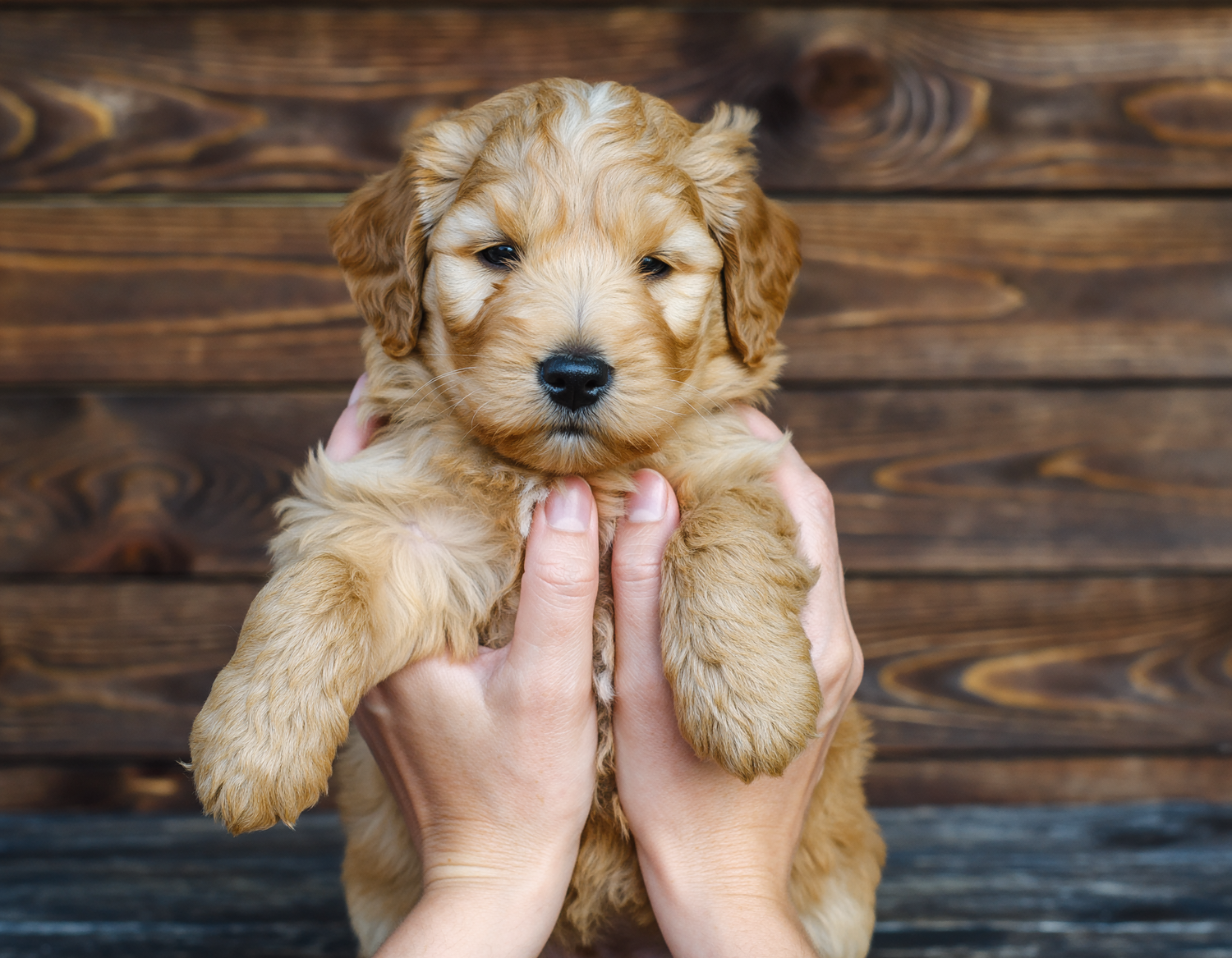
Our puppies are born and raised in our home in Anderson, Indiana. We follow the Puppy Culture program from day one, so your puppy comes home at 8 weeks already used to people, sounds, a crate, and grooming.
What is Puppy Culture?
Puppy Culture is a program for breeders, created by Jane Killion. It lays out what a puppy needs at each stage, from birth to about 12 weeks. We follow it from the day the puppies are born until they go home with you at 8 weeks.
Why does it matter? Because a lot of a dog's personality is set in those first weeks. A puppy who has heard a vacuum, had their nails trimmed, and solved a few small problems before 8 weeks usually walks into a new home with a lot less fear.
What happens each week?
| Age | What we do |
|---|---|
| Days 3 to 16 | Early Neurological Stimulation (ENS) once a day |
| Weeks 2 to 3 | Eyes and ears open. We start gentle handling and quiet new sounds. |
| Weeks 3 to 4 | New surfaces and a litter box |
| Weeks 4 to 8 | Crate naps, sound work, nail trims, brushing, and small problem-solving games |
| Week 6 | Pick day, plus an optional socialization event at Dig Dig for Kids in Anderson |
| Week 8 | Vet health check, then home with you |
How do we get puppies ready for real life?
Sounds
We play recordings of thunderstorms, fireworks, traffic, and household noise, starting quiet and getting louder. We also play classical music for them.
Crate time
From about 4 weeks, puppies take daily naps in a crate. By the time they go home, the crate is a place to sleep, not a punishment.
Grooming
An Australian Labradoodle will see a groomer for life. So we trim nails, brush coats, and handle paws and ears early, while it is still no big deal.
People
Our three kids help socialize the puppies. At 6 weeks, puppies can also meet more kids at our socialization event at Dig Dig for Kids.
Who raises the puppies?
We do. Puppies are born and raised in our house in Anderson, not a kennel. Elizabeth is a registered nurse, and she runs their health and development, from newborn checks to the vet visit before they go home. Jason handles the breeding plans and the health testing on the parents.
What doesn't Puppy Culture do?
It does not give you a trained dog. It gives you a confident puppy who is ready to learn. In other words, it is a head start, not a finish line.
Questions about how we raise our puppies
What is Early Neurological Stimulation?
Five short handling exercises done once a day from day 3 to day 16. Each one takes a few seconds. The idea is a small, safe amount of stress early on, so puppies handle new things better later.
Are your puppies potty trained?
Not fully, and no 8-week-old puppy is. However, they are litter trained, which means they already know to go away from where they sleep. That gives you a head start.
Can I see the puppies while they grow?
Yes. We share photos and video with families on the litter, and you can visit by appointment.
Do I still need to train my puppy?
Yes. We give you a puppy who is ready to learn. The first year of training is still up to you, and we are glad to help along the way.
Want a puppy raised this way?
Click here to see when our next litters are due. Text us at 317-608-9260 or email wallsfamilydoodles@gmail.com with any questions.