What's the Most Mellow Doodle Breed to Buy?

Sarah from Fishers sat in our living room last week. Her family had visited three breeders already. She looked exhausted.

"Every breeder says their dogs are calm," she said. "But when we visited, the dogs were bouncing off walls. My kids loved it. My husband and I? Not so much."

She wanted a dog her family could actually relax with. She didn't want a couch potato. She just wanted a dog that knew when playtime ended and cuddle time began.

If you're comparing doodle breeds, you're probably asking the same question. Which one settles down? Which one doesn't need constant entertainment? Which one fits a normal family life?

The answer might surprise you.

Australian Labradoodles Are Calmer Than Most Doodle Breeds

We've raised Goldendoodles before starting with Australian Labradoodles. The difference is clear from day one.

Goldendoodles are wonderful dogs. They're friendly and smart. But they run higher energy than Australian Labradoodles. They need more exercise. They take longer to settle indoors.

Bernedoodles are sweet and gentle. But they can be anxious. Many develop separation problems. They struggle more with stress than Australian Labradoodles.

Australian Labradoodles were bred differently. They come from decades of careful multi-generational breeding. That breeding focused on temperament just as much as coat or health. The result is a dog that naturally knows how to be calm.

Research from the University of Pennsylvania School of Veterinary Medicine found that genetics explain 60 to 70 percent of behavioral traits like trainability and temperament in dog breeds.¹ For Australian Labradoodles, those genetics have been refined over generations specifically to create balanced, steady companions.

When you get an Australian Labradoodle, you're not gambling. You're getting a dog bred for the exact calm temperament you want.

They're Mellow But Not Lazy

Let's be clear about what "mellow" means.

Our Australian Labradoodles love to play. They'll fetch balls in the backyard. They'll wrestle with our daughters. They'll hike trails with you on weekends.

But they switch modes easily. After 30 minutes of play, they're ready to lay at your feet. When you sit down for dinner, they settle. When you're working from home, they nap nearby.

That's the difference. A Goldendoodle might need an hour of intense exercise before calming down. A Bernedoodle might follow you anxiously from room to room. An Australian Labradoodle just adapts to your rhythm.

Most families don't want a high-energy athlete or a nervous shadow. They want a companion. That's what Australian Labradoodles do best.

If you're looking for a calm family dog raised with Puppy Culture methods that reduce anxiety even further, visit our available puppies page to see upcoming litters.

The Puppy Stage Still Requires Patience

No doodle is mellow at 8 weeks old.

Puppies have energy. All of them. They bite. They jump. They zoom around your house like tiny tornadoes.

That's normal. It takes 4 to 6 months for puppy energy to settle. Even with Australian Labradoodles.

The difference is what happens after that phase. By 6 months, our dogs are already showing calm behavior. They understand "settle" commands. They can relax through a family movie night.

Goldendoodles often take a full year or more to calm down. Bernedoodles can remain anxious well into adulthood without proper training. Australian Labradoodles just mature faster into the mellow companions families want.

That faster maturing comes partly from genetics. But it also comes from our Puppy Culture program. We start early neurological stimulation at 3 days old. We expose puppies to challenges and new experiences every week. They leave our home confident and adaptable.

Families who buy from breeders without these programs end up with dogs that take years to settle. Our dogs show calm behavior much earlier.

Multi-Generational Breeding Makes the Difference

Here's why Australian Labradoodles are calmer than other doodles.

Most Goldendoodles are F1 or F1B crosses. That means they're first or second generation mixes of Golden Retrievers and Poodles. You're combining two different breed temperaments. The result can vary wildly.

Same with Bernedoodles. Most are first or second generation Bernese Mountain Dog and Poodle crosses. You might get the Bernese calmness. You might get the Poodle energy. It's unpredictable.

Australian Labradoodles are different. They've been bred for 30-plus years now. Our dogs are multi-generational. Both parents are Australian Labradoodles. Both grandparents are Australian Labradoodles. Going back generations.

That consistency means predictable temperament. You know what you're getting. The calm behavior isn't a lucky draw. It's bred into the line.

We also use Cocker Spaniel genetics in our lines. That adds even more mellowness. Cockers are naturally calm and gentle. That trait shows up in our dogs.

When you're comparing breeders, ask about generation. Multi-generational Australian Labradoodles will always be calmer than first-generation crosses of any doodle breed.

Separation Anxiety Is Almost Non-Existent

This is where Australian Labradoodles really shine compared to other doodles.

Goldendoodles struggle with being alone. They're people-focused dogs. That's wonderful until you need to run errands. Many develop separation anxiety. They bark. They destroy things. They stress when you leave.

Bernedoodles are even worse. Their Bernese Mountain Dog genetics make them clingy. They want constant contact. Leaving them alone can cause serious anxiety problems.

Australian Labradoodles handle alone time much better. They're still people-oriented. But they're confident. They don't panic when you leave.

Part of that comes from breeding. Part comes from our Puppy Culture program. We teach puppies from week 3 that being alone is safe. We practice short separations. We build independence.

Families are always surprised when they bring home their puppy. They expected crying and stress. Instead, the puppy settles into their crate and naps.

That's not luck. That's intentional breeding and raising creating a mellow, confident dog.

Ready to apply for a puppy from our calm, multi-generational Australian Labradoodle lines? We'll walk you through our process and answer all your questions.

Size Doesn't Change Temperament Much

Some families wonder if smaller Australian Labradoodles are calmer than larger ones.

The short answer is no. Size doesn't significantly affect mellowness.

We breed medium Australian Labradoodles. They range from 30 to 45 pounds. All of them show the same calm temperament regardless of whether they end up 32 pounds or 43 pounds.

Miniature Australian Labradoodles might be slightly higher energy simply because they're smaller and more compact. But the breed temperament is still the same. They're still calmer than Goldendoodles or Bernedoodles of similar size.

Standard Australian Labradoodles over 50 pounds are still mellow. They're just bigger mellow dogs.

What matters more than size is breeding. A well-bred multi-generational Australian Labradoodle of any size will be calmer than a poorly bred first-generation doodle mix.

Focus on the breeder's program and the parent dogs' temperament. That predicts your puppy's behavior much more than final adult size.

They're Perfect for First-Time Dog Owners

If you've never owned a dog before, Australian Labradoodles are ideal.

Their calm nature means fewer behavior problems. They're not destroying your house out of boredom. They're not jumping on every guest who walks in. They're not barking at every sound outside.

They're also highly trainable. They want to please you. Commands stick quickly. House training happens faster than with other breeds.

Compare that to a high-energy Goldendoodle or anxious Bernedoodle. Those breeds can overwhelm first-time owners. The constant energy or anxiety becomes exhausting. People give up.

Australian Labradoodles give you space to learn. They're forgiving. They adapt to your mistakes. By the time you figure out what you're doing as a dog owner, they've already settled into being great companions.

That's why so many of our families are first-time dog owners. They didn't want to start with a difficult breed. They wanted a dog that would grow with them.

What Families Say About the Difference

A Noblesville family bought a Goldendoodle from another breeder before finding us. They loved that dog. But they were honest about the challenges.

"She needed two hours of exercise every day," the mom told us. "If we didn't tire her out, she'd chew furniture. She was 2 years old before she could settle during dinner."

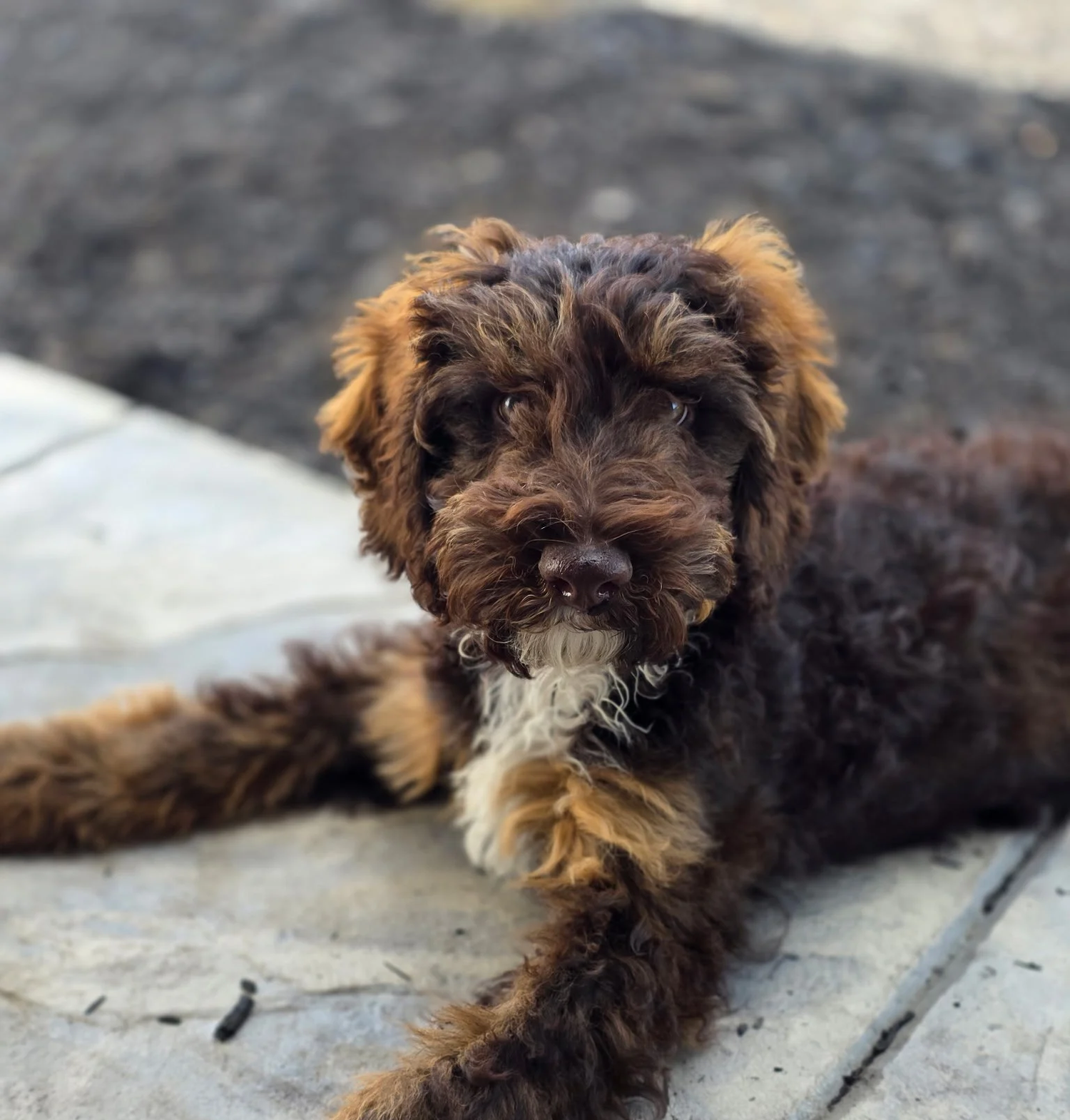
They came to us for their second dog. They wanted calmer. They got a chocolate tricolor Australian Labradoodle from our program.

"It's night and day," she said six months later. "This dog plays when we play. She naps when we're busy. She's part of our routine instead of controlling it."

A family in Greenfield had the same experience with a Bernedoodle. Great dog. But anxious. Followed them everywhere. Couldn't be left alone.

Their Australian Labradoodle from us is confident and calm. The kids can go to school. The parents can work. The dog is fine.

That's what we mean by mellow. Not lazy. Not boring. Just calm and adaptable.

FAQ: Are mini Australian Labradoodles calmer than standard Australian Labradoodles?

Size doesn't significantly affect temperament in Australian Labradoodles. Mini, medium, and standard sizes all show the same calm, adaptable nature. What matters more is multi-generational breeding and proper early socialization through programs like Puppy Culture.

Are Australian Labradoodles Excessive Barkers?

Find out if Australian Labradoodles are excessive barkers here.

References

¹ Serpell, James A., et al. "Genes Play a Role in Dog Breed Differences in Behavior." Penn Today, University of Pennsylvania School of Veterinary Medicine, 10 Oct. 2019, penntoday.upenn.edu/news/genes-play-role-dog-breed-differences-behavior.