
Coat Color Genetics
Which Australian Labradoodle coat color is hardest to find?
Tricolor roans and the dilute colors, blue and lavender, are the hardest Australian Labradoodle colors to find. Each one needs several recessive genes to land in the same puppy, and the odds drop quickly every time you add another one.
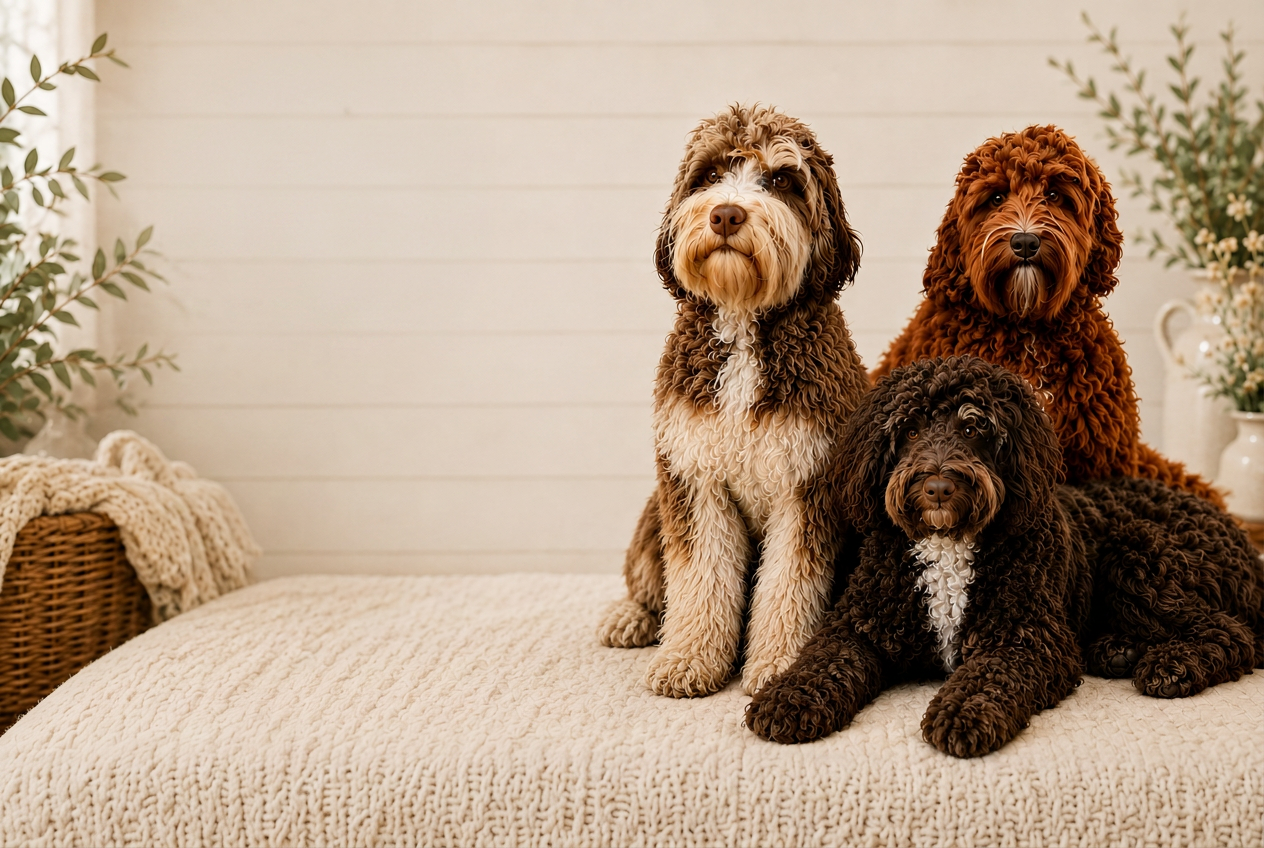
Which colors are hardest to find?
Here is how the colors line up from hardest to easiest, based on how many genes have to cooperate.
| Color | What has to line up | How often you see it |
|---|---|---|
| Tricolor roan | Tan points, parti white, and roan, all in one puppy | Hardest |
| Blue or lavender | Two copies of the dilute gene on a black or chocolate dog | Very hard in Australian Labradoodle lines |
| Tricolor | Tan points and parti white, with no dominant black to hide them | Hard |
| Deep red | Two copies of red plus strong intensity genes | Hard to keep dark |
| Phantom or parti | One pattern, each from a recessive gene | Moderate |
| Cream, caramel, chocolate, black | Fewer genes involved | Common |
Why do some colors take so long?
Most of the rare colors come from recessive genes. A recessive gene only shows when a puppy gets a copy from both parents. If both parents carry one hidden copy, about 1 in 4 puppies will show it.
So what happens when you need more than one? The odds multiply. Two recessive traits that both parents carry give you about 1 in 16. Three give you about 1 in 64. In other words, a litter of eight could easily have none at all.
The odds get much better when the parents already show the color. Two tricolor parents pass tan points and parti to every puppy, as long as nothing else in their genetics covers it up. That is why breeders who want tricolors pair dogs who carry the right genes, and why genetic testing matters so much.
What do the color genes actually do?
Each letter on a genetic panel stands for a spot (locus) on a dog's DNA. Here are the ones that matter for color.
| Gene | What it controls | What to know |
|---|---|---|
| A locus | Pattern: sable or tan points | at/at gives phantom markings, but only if the K locus lets it show. |
| K locus | Dominant black | KB covers up the A locus pattern. ky/ky lets it show. |
| B locus | Black or chocolate | b/b turns black pigment into chocolate. |
| D locus | Dilute | d/d turns black into blue and chocolate into lavender. These puppies are born that color. |
| E locus | Red and cream | e/e makes a red, apricot, or cream coat and hides the pattern genes underneath. |
| S locus | White spotting (parti) | sp/sp gives a parti coat with large white areas. |
| R locus | Roan and ticking | Only shows up in white areas, so it matters most on parti dogs. |
| M locus | Merle | Our parents all test m/m, which means no merle. |
One common mix-up is worth clearing up. Blue is a dilute color that a puppy is born with. It is not the same as a black dog that slowly greys out as he gets older, which comes from a different gene.
What do our own dogs' genetics show?
Every one of our parents has a full Orivet genetic panel. Here is what their colors tell you.
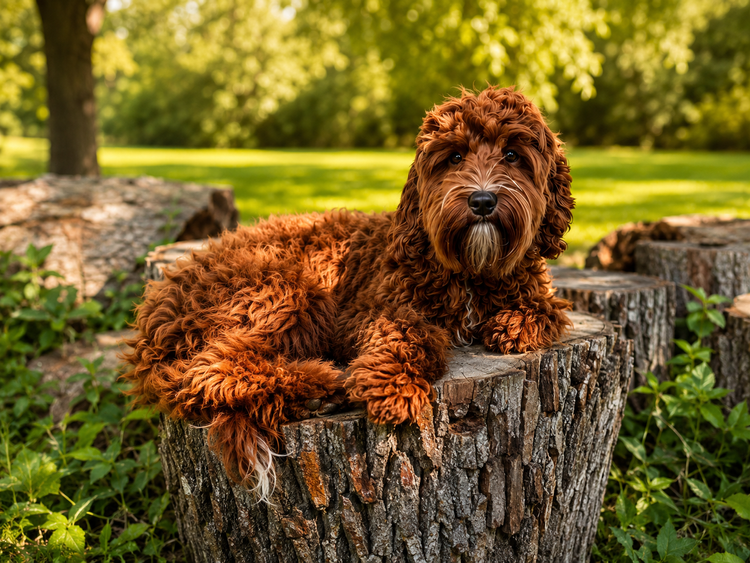
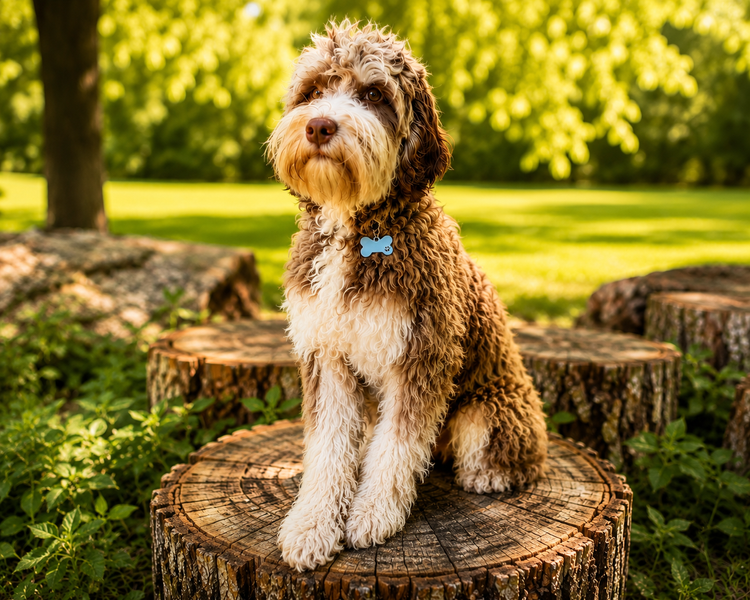
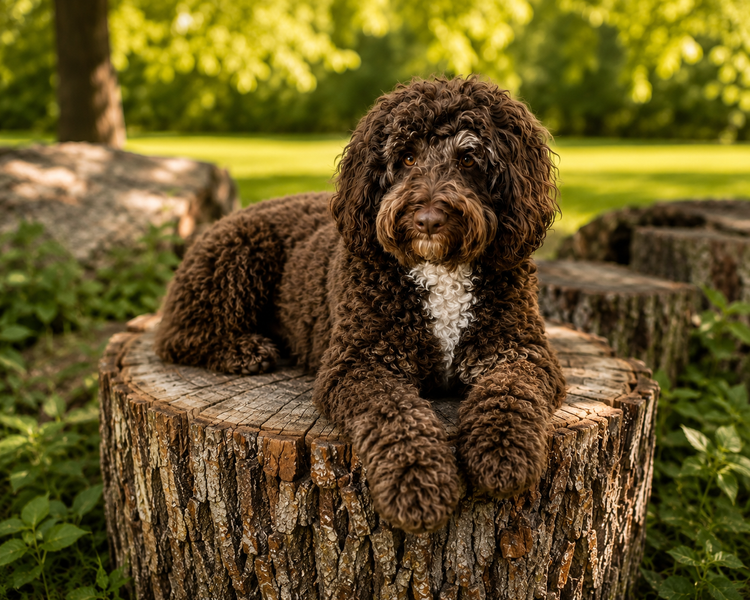
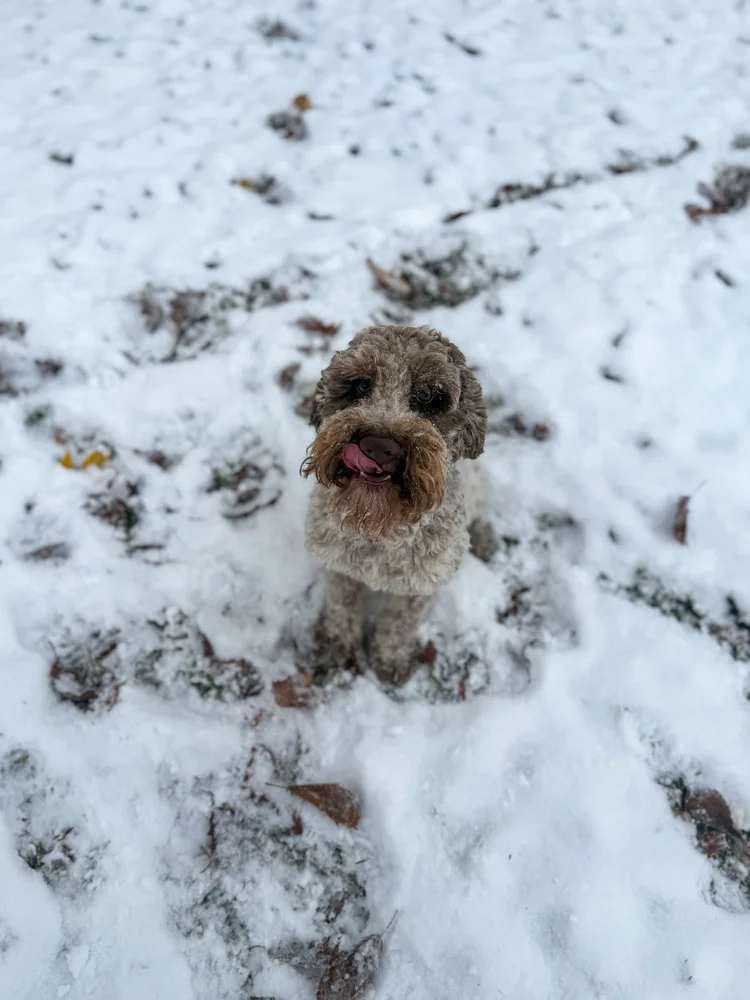
You can see every parent's full panel, along with their health testing, on our Meet the Parents page.
How do we predict a litter's colors?
Take Ryder and Strawberry as an example. Strawberry is e/e and Ryder is E/e, so about half of their puppies should be red. The other half get Ryder's dark pigment.
Both dogs are at/at and ky/ky, so those dark puppies should show tan points. Ryder is b/b and Strawberry carries one b. That means the dark puppies should split between chocolate and black with tan markings. White markings depend on other genes and are harder to call ahead of time.
These are odds, not promises. Each puppy is its own coin flip, and a litter does not have to follow the averages.
Should you wait for a rare color?
Color is the first thing most families notice, and we understand that. However, it is the last thing that will matter once your dog is part of the family. Health, temperament, and how well a puppy fits your home matter much more than whether he is red or chocolate.
If one color matters a lot to you, tell us. We will be honest about the odds in an upcoming litter. With that said, families who stay open on color usually bring a puppy home sooner.
We raise every puppy the same way, whatever the color. Each one gets early neurological stimulation, Puppy Culture, and plenty of time with our kids.
Do rare colors cost more?
Not here. Every puppy is priced the same whatever the color. A tricolor costs us the same to raise as a cream puppy, and we do not want to reward breeding for color over health. See our pricing and details.
Wondering which colors are coming next? Our Australian Labradoodle puppies for sale page shows the expected colors for each upcoming litter.
When is the next litter?
Puppies go home at 8 weeks old. Click here to see when our next litters are due.
Common questions about Australian Labradoodle colors
What is the rarest Australian Labradoodle color?
Tricolor roan is the hardest to find, followed by the dilute colors, blue and lavender. Each one needs several recessive genes to line up in the same puppy.
What is the difference between a phantom and a tricolor?
A phantom is a solid dog with tan markings on the face, chest, and legs. A tricolor is a phantom that also has white parti markings, so you see three colors instead of two.
Do you charge more for tricolors or other rare colors?
No. Every puppy is priced the same whatever the color. A rare coat does not cost us anything extra to raise. See our pricing and details.
Can you guarantee a puppy's color?
No. We can tell you the odds before a litter is born from the parents' genetic tests. Once the puppies arrive, you can see their actual colors before you choose.
Do any of your dogs carry merle?
No. All of our parents test m/m, which means they do not carry merle.
Do red Australian Labradoodles fade?
Many reds lighten some as they grow up. How much depends on intensity genes that the labs cannot fully test for yet, so we cannot promise how deep a red will stay.
Want to see the colors in person?
Meet our parent dogs, see their genetic panels, and apply when you are ready.
Related reading: Tricolor and phantom Labradoodles, roan Australian Labradoodles, and our genetic testing.
Sources
- University of Utah Genetic Science Learning Center. Mutt Mixer: Traits Explained. Learn.Genetics.
- Our parent dogs' Orivet genetic panels, listed on our Meet the Parents page.