Which Dog Breed Ranks Highest for Families with Children?

When Elizabeth was pregnant with our first daughter, we talked about getting a dog. But we weren't sure when. Or what kind.

We had been guardian homes for Goldendoodles before starting our own breeding program. That meant we raised puppies in our home for other breeders. We saw a lot of litters. And we noticed something that bothered us.

The puppies were all over the place. Same mom. Same dad. But completely different temperaments. One puppy would be calm and confident. The next one would be anxious and jumpy. Some were gentle with kids. Others were too rough. It felt like a lottery.

When our daughter was born, this mattered more. We didn't want a dog that might be great with kids or might not be. We needed predictable. We needed reliable.

That's when we discovered Australian Labradoodles. Not just Labradoodles—Australian Labradoodles. The difference matters. These dogs are bred for consistency across generations. Every puppy in a litter has similar temperament. No lottery. No surprises.

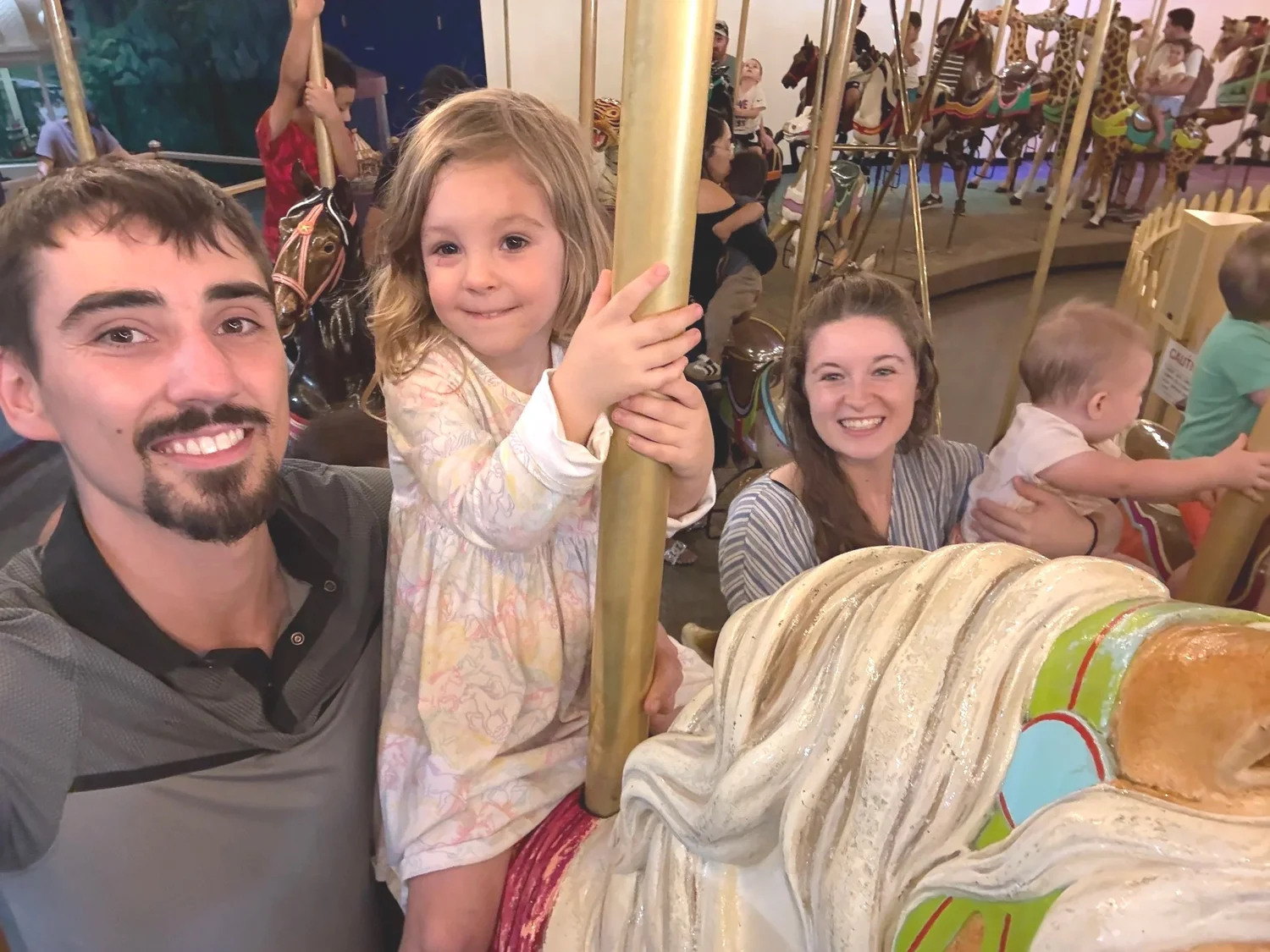
Now we have two daughters—ages one and three. We have four adult Australian Labradoodles. And I can tell you from living it every single day: these dogs were made for families with young kids.

But are they the highest-ranking breed for every family? Let's be honest about that.

What Actually Makes a Dog Good with Kids?

Before we compare breeds, we need to talk about what matters when you have children.

First, patience. Kids are loud. They move fast. They hug too hard. A good family dog doesn't get rattled by this. They stay calm when a toddler squeals. They don't nip when someone accidentally steps on their paw.

Second, energy that matches your family. Some breeds need two hours of exercise every day. That's hard when you're juggling school pickups and work calls and dinner prep. The best family dogs can play hard when you have time. But they also know how to chill on the couch.

Third, size matters more than people think. Really big dogs knock over toddlers without meaning to. Really small dogs can get hurt during rough play. Somewhere in the middle—30 to 60 pounds—works best for most families.

Fourth, trainability. Dogs that learn fast make everyone's life easier. Your kids can help teach commands. The dog figures out house rules quicker. Everybody feels more confident.

Fifth, health. You want a dog that will grow up with your children. Breeds with serious health problems or short lifespans are heartbreaking. You're not just picking a puppy. You're picking a family member for the next 12 to 15 years.

And if someone in your family has allergies? Then you need a dog that doesn't shed. Not every family needs this. But for families who do, it's not optional. It's everything.

Now let's look at how different breeds stack up.

Labs and Goldens Are Popular for Good Reasons

Labrador Retrievers show up on every "best family dog" list. And for good reasons. They're friendly. They're loyal. They're patient with kids.

My dad had Labs growing up. They were great dogs. But they had some challenges.

Labs are high-energy. They need a lot of exercise. More than most busy families can give them. They also shed constantly. Hair everywhere. On the couch. On your clothes. In your car.

And they're big. Sixty to eighty pounds. When my nephew was two, his grandma's Lab would accidentally knock him over just by walking past him. The dog didn't mean to. But it happened all the time.

Golden Retrievers are similar. Gentle, patient, wonderful with kids. But same drawbacks. Heavy shedding. High energy. Large size.

If you don't have allergies and you have time for daily exercise, these breeds are excellent. Millions of families love them. But they're not the right fit for everyone.

Why We Don't Recommend First-Generation Goldendoodles

Goldendoodles got popular because people wanted that Golden Retriever temperament without all the shedding. Mix a Golden with a Poodle, and you get a hypoallergenic dog. Right?

Not exactly.

First-generation Goldendoodles—F1s—are unpredictable. We saw this over and over when we were guardian homes.

One puppy in a litter might be calm and easy. The next one might be anxious. One might not shed at all. The next one might shed like crazy. One might love kids. Another might be too jumpy and rough.

It's because they're first-generation crosses. You're mixing two different breeds. You don't know which parent's traits each puppy will inherit. It's genetics. You can't control it.

For a family with young children, this is risky. You're spending $2,000 to $3,000 on a puppy. You need to know what you're getting. You can't afford a dog that ends up being too high-energy or too anxious or still triggers allergies.

That's why we switched to Australian Labradoodles.

Ready to see our available puppies? Check out Australian Labradoodles raised with young children right here in Anderson.

Why We Chose Australian Labradoodles for Our Own Kids

Australian Labradoodles are different from regular Labradoodles. And the difference matters a lot.

These dogs were created in Australia starting in 1989. Breeders there wanted dogs that could work as service animals for people with allergies and disabilities. So they bred for specific traits. Calm temperament. Emotional intelligence. Adaptability. And a hypoallergenic coat.

But here's the key part: they didn't stop at one generation. They kept breeding the best dogs to each other. Generation after generation. For over 30 years.

That's why they're called multi-generational Australian Labradoodles. And that's why they're consistent. Every puppy in a litter has similar temperament, size, and coat type. No surprises.

When our oldest daughter was born, we got our first Australian Labradoodle. The difference from Goldendoodles was obvious immediately. Our dog was calm with the baby from day one. She didn't get anxious when the baby cried. She didn't jump on us when we were holding her. She just... knew.

Now we have two daughters. And four adult Australian Labradoodles. Our girls are one and three. They're loud. They're fast. They're unpredictable. And our dogs handle it beautifully.

Our one-year-old pulls ears sometimes. The dogs just move away calmly. Our three-year-old runs and screams during play. The dogs play along without getting too rough. When the girls are sick or upset, the dogs lie next to them quietly.

Nobody trained them to do this. It's just their temperament.

The energy level works for us too. Our dogs love playing in the yard. They'll chase balls. They'll run around with the kids. But when we come inside, they settle down. No constant begging for more exercise. No destructive behavior from boredom. They switch modes easily.

And the size is perfect. Our medium Australian Labradoodles are 35 to 40 pounds. Big enough to play with our three-year-old. Small enough not to knock over our one-year-old. If we had bigger dogs, we'd worry more about accidents.

The hypoallergenic coat was actually a bonus for us. We don't have allergies. But so many families who contact us do. And for them, this feature changes everything. They can finally have a dog without worrying about triggering asthma or allergies.

What Our Puppies Learn Before Going Home

Genetics matter. But so does how puppies are raised.

We start socializing puppies with children at six weeks old. We run a program called Dig Dig for Kids where children from our community come handle the puppies. The puppies get pet by different kids. They hear high-pitched voices. They experience the unpredictable energy that comes with children.

Our own daughters help us raise every litter. They're in the puppy room daily. They pet the puppies. They play with them. They carry them around. This teaches puppies that children are safe and fun.

We also use Puppy Culture. Starting at three weeks old, puppies experience different sounds. Vacuum cleaners. Doorbells. Kids laughing. Babies crying. Thunder. Fireworks. By eight weeks old, they've heard it all.

This early exposure makes a huge difference. When puppies go home, they don't startle when a kid squeals. They don't get nervous during birthday parties. They've already learned that normal family chaos is okay.

Research backs this up too. Michigan State University Extension studied how pets affect children's development. They found that kids who grow up with dogs learn responsibility, trust, and empathy. Dogs teach patience through daily care routines. They build confidence when kids help with training. And they improve social skills when kids meet other dog owners at parks¹.

Australian Labradoodles are especially good at teaching these lessons. They're forgiving when kids make mistakes. If our three-year-old forgets to fill the water bowl, the dogs don't hold grudges. If she practices "sit" twenty times in a row, they stay patient.

One Anderson family told us their son became more responsible after getting his Australian Labradoodle. He started doing homework without being asked so he could play with the dog afterward. He cleaned his room so the dog wouldn't chew his toys. The dog motivated him in ways they couldn't.

Start your application here to learn more about how our puppies are raised.

Stories from Families We've Worked With

Two years ago, a Greenfield family contacted us. They had two boys—ages four and seven. Their older son had autism. He struggled with anxiety, especially at bedtime and during transitions.

They wanted a dog that could provide emotional support. But they worried a dog might add stress instead of reducing it. What if the dog was too energetic? What if their son got overwhelmed?

They got an Australian Labradoodle from our program. Six months later, the mom sent us updates with photos. Their son was sleeping through the night now. His anxiety had decreased during transitions. The dog seemed to sense when he needed space and when he needed comfort.

She told us it was the best decision they'd made for their family.

Another family from Fishers was nervous about getting a puppy with a newborn. Their baby was three months old. They worried the dog would be too rough. Or wouldn't adjust to the crying and chaos that comes with an infant.

We explained how our dogs are raised with young children from birth. How our own one-year-old and three-year-old interact with our adult dogs every day. How the dogs naturally adjust their energy around babies.

They decided to go for it. The transition was smoother than they expected. The dog was gentle from day one. There were occasional bumps during play—that happens with any dog—but nothing concerning. The dog learned to stay calm when the baby cried. She'd lie near the bassinet during naps.

Now their daughter is two. She and the dog are best friends. They sent us a video of their daughter "reading" books to the dog. The dog sits there patiently through the whole story.

A Noblesville mom reached out because her eight-year-old daughter was shy. She struggled making friends at school. The mom thought a dog might help her daughter build confidence.

After getting their Australian Labradoodle, things changed. The daughter started taking the dog to parks. Other kids would come up to pet the dog. Suddenly she had an easy conversation starter. Now she has regular playdates with kids she met through the dog.

These stories aren't guarantees. Every dog is different. Every family is different. But they show what's possible when you match the right breed with the right family.

Being Honest About Safety and Supervision

We need to talk about safety honestly. Even gentle breeds need supervision with young kids.

Puppies will nip during play. This is normal. It's not aggression. It's how puppies explore their world and play with their siblings. We start teaching bite inhibition during Puppy Culture. But families need to keep reinforcing this at home. It usually stops completely by four to five months old.

Toddlers need to learn boundaries too. Don't pull ears or tails. Don't bother the dog while eating or sleeping. Don't climb on the dog like furniture. These rules protect both the child and the dog.

Always supervise interactions between dogs and children under five. Even the gentlest dog can accidentally knock over a wobbly toddler. Even well-behaved kids might do something that startles a dog. Supervision catches problems before they happen.

Some families worry about size. Will a 40-pound dog be too big for a young child? In our experience, medium Australian Labradoodles are naturally careful around small kids. Our 35-pound dogs move gently around our one-year-old. They seem to understand she's little.

But if size is a real concern, miniature Australian Labradoodles are another option. They're 15 to 25 pounds. Still sturdy enough for play. Just smaller overall.

Families also ask about allergies. Australian Labradoodles are hypoallergenic. But no dog is 100% allergy-proof. If someone in your family has severe allergies, come meet our adult dogs first. Spend time with them. See how your family reacts. This gives you confidence before committing to a puppy.

The good news is Australian Labradoodles are among the safer breeds for families. They don't have the prey drive you see in terriers. They don't have the guarding instincts of working breeds. They don't have the intensity of herding dogs. They're just easygoing dogs who want to be part of the family.

Other Breeds That Work Well for Families

Australian Labradoodles aren't the only good family dogs. Let's be clear about that.

Beagles are friendly and sturdy. Their medium size works well. They're generally healthy.

But Beagles bark a lot. They have hunting instincts that can make training harder. For families in apartments or close to neighbors, this can be a dealbreaker.

Poodles are smart and hypoallergenic. They come in three sizes. When bred well, they're good with children.

But Poodles can be high-strung without careful breeding. They need significant grooming. And their intelligence sometimes makes them stubborn.

Cavalier King Charles Spaniels are gentle and affectionate. They're good for families who want a smaller dog.

But they have serious health problems. Heart issues especially. Their lifespan is often shorter than other breeds.

Bernedoodles are growing in popularity. They're sweet dogs.

But in our experience, they tend to be more anxious than Australian Labradoodles. We have friends and family with Bernedoodles. The dogs often struggle with separation anxiety. They follow their owners everywhere. They have trouble being alone.

The truth is different breeds work for different situations. A family with teenagers might love a high-energy Lab. A family in an apartment might prefer a smaller Poodle. An active family with a huge yard might want a Bernedoodle.

But for families with young children who need predictability, patience, and hypoallergenic coats? Australian Labradoodles rank very high.

FAQ: Are Australian Labradoodles Good with Kids of All Ages?

Do Australian Labradoodles handle babies and toddlers well?

Yes, they do. We have a one-year-old and a three-year-old. Our four adult Australian Labradoodles are wonderful with them. The dogs are naturally gentle around our babies. They move carefully. They don't jump. When our one-year-old pulls ears or grabs tails, the dogs just move away calmly. There are occasional bumps during play—that's going to happen with any dog—but nothing that concerns us. We still supervise all interactions. You should always watch dogs and kids under five together. But Australian Labradoodles naturally adjust their energy around small children. That's one of the main reasons we chose this breed for our own family.

What is an Australian Labradoodle?

Find out what an Australian Labradoodle is here.