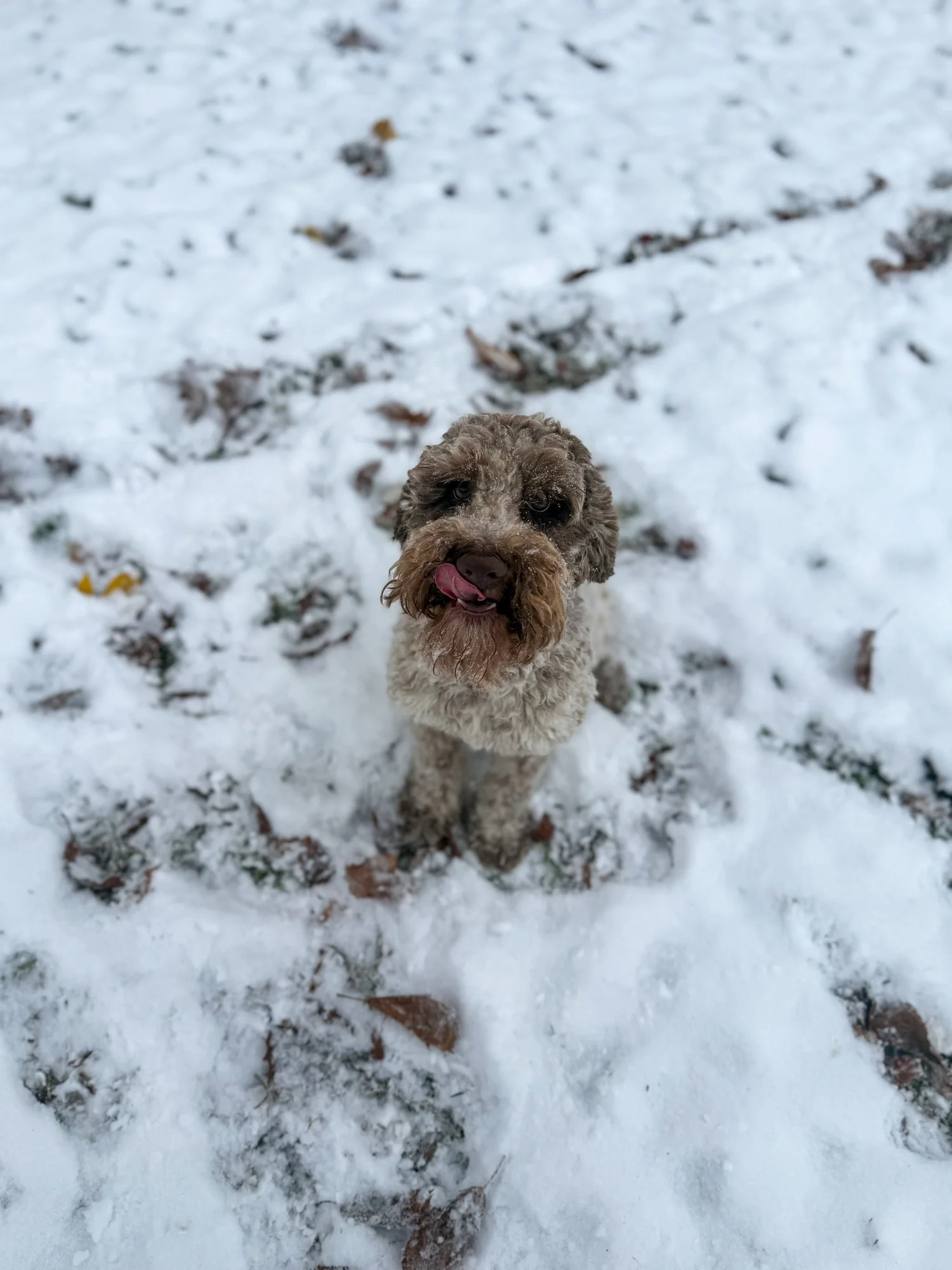
Roan Australian Labradoodle Puppies in Anderson, IN | Unique Coat Pattern
In Anderson, parti and roan Australian Labradoodles feature white base coats with chocolate or caramel patches and flecking. This guide covers parti versus roan definitions, how patterns develop from birth to maturity, genetic requirements for these rare patterns, and maintenance expectations. Multi-generational breeding, WALA standards, and patterns visible at birth ensure predictability in mini and medium sizes. Health-tested parents with documented parti and roan genetics produce one-of-a-kind coat patterns while maintaining hypoallergenic fleece qualities.
Roan Labradoodles Show Fine Colored Flecks Throughout White Base Coats
Roan Australian Labradoodles display a speckled appearance where fine colored hairs intermix evenly with white throughout the coat. This creates what breeders call "ticking"—small flecks of chocolate, caramel, or black distributed across areas that would otherwise be solid white. The pattern resembles salt-and-pepper coloring when viewed from a distance.
Roan density varies significantly between individuals. Some puppies develop heavy roan where colored flecks dominate, creating a mostly chocolate or caramel appearance with scattered white. Others show light roan with predominantly white coats punctuated by occasional colored hairs. Each Walls Family Doodles puppy from Edgewood to River Forest develops a completely unique roan density—no two patterns match exactly.
At Mounds State Park in Anderson, roan patterns stand out during outdoor adventures. The distinctive flecking creates visual interest while maintaining the hypoallergenic fleece coat texture families depend on. Multi-generational breeding ensures roan genetics express predictably across litters, though individual pattern density remains beautifully unpredictable¹.
Parti Patterns Feature White Base With Bold Chocolate or Caramel Patches
Parti Australian Labradoodles display at least 50% white base coat with solid colored patches rather than flecking. These patches typically appear on ears, back, and tail, creating high-contrast patterns that photograph beautifully. The distinction between white and colored areas remains clear and defined—you see distinct patches, not blended flecking like roan.
Patch placement varies by individual puppy. Some show large chocolate patches covering most of the back and head. Others display smaller scattered patches concentrated on ears and hindquarters. The white base coat provides a crisp canvas for whatever colored patches genetics determine.
Downtown Anderson families often choose parti patterns for maximum visual impact. The bold contrast between white and chocolate or caramel creates eye-catching appearances at community events and family gatherings. Indiana's snowy winters create beautiful seasonal contrast with chocolate parti markings, making these dogs photograph exceptionally well year-round.
Patch placement becomes visible at birth, allowing families to know their puppy's exact pattern before pickup at eight weeks. This predictability helps Western Village families select puppies whose specific parti distribution appeals most to their preferences.
Roan Flecking Becomes More Visible as Puppies Shed Baby Coats
Newborn roan puppies start life appearing mostly white with minimal ticking visible. Families in Glyn Ellen picking up eight-week-old puppies see emerging flecks, but the full adult roan pattern develops gradually. The most dramatic changes occur between four and ten months as baby coats shed and adult fleece grows in.
This progression happens because roan is controlled by the USH2A gene, which regulates when and how colored hairs develop in white areas¹. Puppies born with clear white markings begin filling in with colored flecks during their first weeks of life. The process continues intensifying well into the first year.
Some roans darken significantly during maturation. A puppy showing light caramel ticking at eight weeks might develop medium to heavy roan density by their first birthday. Adult parent dogs at Walls Family Doodles demonstrate mature roan expression, giving families realistic expectations for long-term pattern development.
Weekly photos from birth document each puppy's roan progression. Families receive these updates showing how ticking emerges and intensifies, preparing them for their puppy's eventual adult appearance. Anderson pickup at eight weeks shows emerging patterns, but full roan density won't plateau until 10-12 months of age.
Multi-Generational Genetics Required for True Parti and Roan Expression
First-generation Labradoodles rarely produce true parti or roan patterns. The genetics remain too unpredictable when crossing Labrador Retrievers with Poodles directly. Multi-generational Australian Labradoodles carry recessive parti genes and dominant roan genes through multiple breeding cycles, creating consistent pattern expression.
Roan operates as a dominant trait—only one parent needs to carry the roan gene for puppies to potentially display the pattern¹. Both Sarge (parti roan) and Summer/Reese (tricolor roan) carry roan genetics, ensuring all Walls Family Doodles litters include roan puppies. This dominant inheritance makes roan more common than recessive phantom or tricolor patterns.
WALA registration documents authentic parti and roan breeding programs in Anderson. Independent registry verification ensures breeders maintain documented pedigrees proving multi-generational status. Small-breeder transparency allows families to review genetic testing results confirming both parents carry appropriate pattern genes.
Multi-generational investment proves commitment to pattern quality over shortcuts. F1 breeders making false parti or roan promises lack the genetic foundation to deliver predictable results. Country Club Heights families researching breeders should verify WALA registration and ask to see parent dogs demonstrating the patterns they promise.
White Base Coats Maintain Standard Grooming Requirements
Contrary to common belief, white-based parti and roan coats require the same grooming frequency as solid-colored Australian Labradoodles. Brushing 2-3 times weekly prevents matting regardless of coat color. Professional grooming every 6-8 weeks maintains coat health and appearance for all fleece-coated dogs.
White does show dirt more visibly than chocolate or caramel. Muddy paws after Mounds State Park hikes appear more obvious on white fur. Spring in Anderson brings mud season from March through April, requiring extra paw cleaning and occasional baths between professional groom appointments.
However, the fleece coat type itself determines maintenance needs, not the color. White parti and roan puppies have identical coat texture to solid-colored littermates. The same anti-matting spray, slicker brushes, and grooming schedules apply universally across all colors.
Anderson has several groomers experienced with doodle coat maintenance. Many families keep parti and roan coats clipped shorter during muddy months for easier cleaning. The white base coat still maintains its hypoallergenic properties regardless of length, so clipping for convenience doesn't compromise the allergy-friendly qualities families need.
Every Parti and Roan Puppy Has Completely Unique Pattern Distribution
No two parti or roan Australian Labradoodles share identical markings. Patch size, placement, and roan density vary dramatically even within the same litter. Genetic randomness creates one-of-a-kind patterns—like fingerprints, each puppy's coat tells a different visual story.
Parti patch distribution remains unpredictable before birth. Some puppies emerge with perfectly symmetrical patches on both ears. Others show asymmetrical patterns with one solid-colored ear and one white. Back patches range from small saddle shapes to large blankets covering most of the spine. This variety means every Walls Family Doodles puppy offers something different.
Roan density likewise varies between littermates. Two puppies from the same parents might develop heavy versus light roan as their adult coats mature. The dominant roan gene ensures the pattern appears, but exact fleck distribution follows no predetermined template.
Anderson families appreciate this individuality when showing off their distinctive dogs at community events. Waitlist holders can request preferences—more white versus more color, heavier versus lighter roan—but exact patterns remain nature's surprise. Multiple photos provided during puppy selection help families choose puppies whose emerging patterns appeal most, though full adult expression won't finalize until after pickup.
FAQs
Q: What is the rarest color in Australian Labradoodles from Anderson?
True lavender and parchment remain the rarest base colors overall. Among patterned dogs specifically, caramel roan with heavy ticking appears less frequently than chocolate or black roan variations. The combination of caramel base color with dense roan flecking requires specific genetic alignment from both parents.
Q: How can I tell if a puppy is roan at birth?
Look for fine colored specks throughout white areas of the newborn coat. Roan appears as light freckling distributed across areas that would otherwise be solid white. This differs from parti patterns showing solid colored patches, or white markings showing no flecking at all. Ticking becomes more visible within the first two weeks.
Q: Do parti and roan Labradoodles shed more because of white coats?
No. Shedding depends entirely on coat type—fleece versus wool—not color. All Walls Family Doodles puppies have fleece coats bred for minimal shedding regardless of pattern. White coats simply show loose hairs more visibly on dark furniture, creating the illusion of heavier shedding when the actual amount remains the same.
Q: Are parti and roan patterns more expensive in Anderson?
All Walls Family Doodles puppies are currently priced at $3,200 regardless of color or pattern. This reflects the health testing, Puppy Culture program, and WALA registration invested in every puppy. Pricing remains consistent across solid colors, parti, roan, phantom, and tricolor patterns.
Q: Can I request more white or more color in a parti puppy?
Preferences are noted when joining the waitlist. Deposit order determines selection priority within each litter. Breeders cannot predict exact patch placement before puppies are born, but families can choose between available littermates based on whose specific parti distribution appeals most once patterns become visible.
Q: Do white coats require special shampoo or products?
Regular dog shampoo works perfectly for white-based coats. Whitening shampoos help maintain brightness if desired, but they're optional rather than required. Consistent brushing prevents matting more effectively than any specialty product. Guidance on coat care comes with every Walls Family Doodles puppy regardless of color.
References
Brancalion, L., et al. "Roan, Ticked and Clear Coat Patterns in the Canine Are Associated with Three Haplotypes Near Usherin on CFA38." Animal Genetics, vol. 52, no. 2, 2021, pp. 198-207. National Center for Biotechnology Information, https://pmc.ncbi.nlm.nih.gov/articles/PMC7986734/.